














What guests are saying
What guests love
- A genuinely central Loop location — steps from the Rookery, the Board of Trade, and the LaSalle Street financial canyon, with the L and Metra close by.
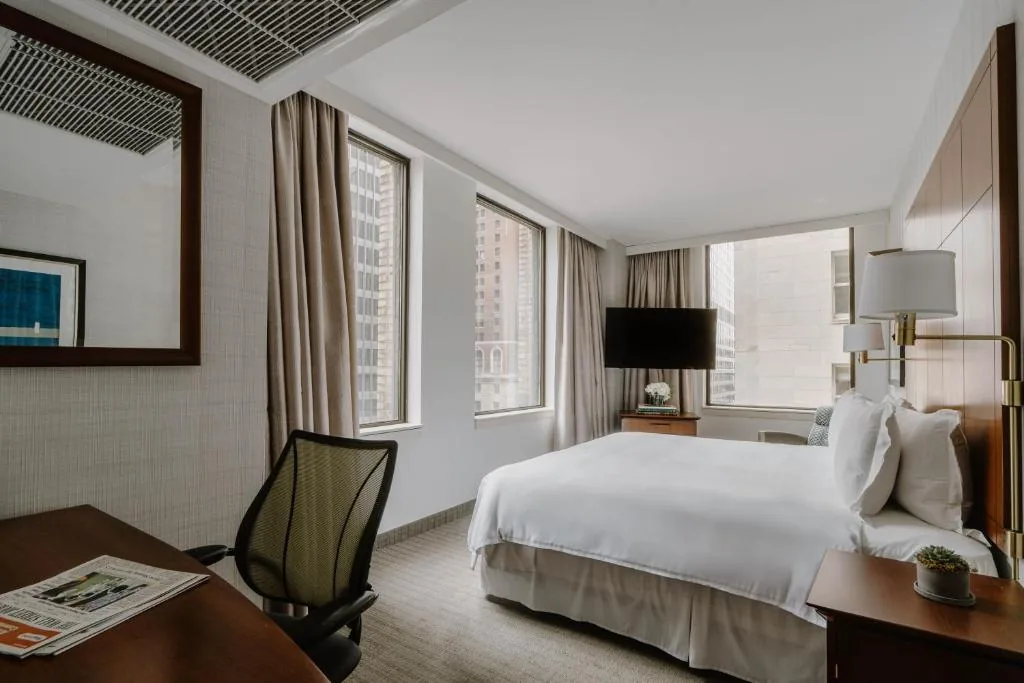
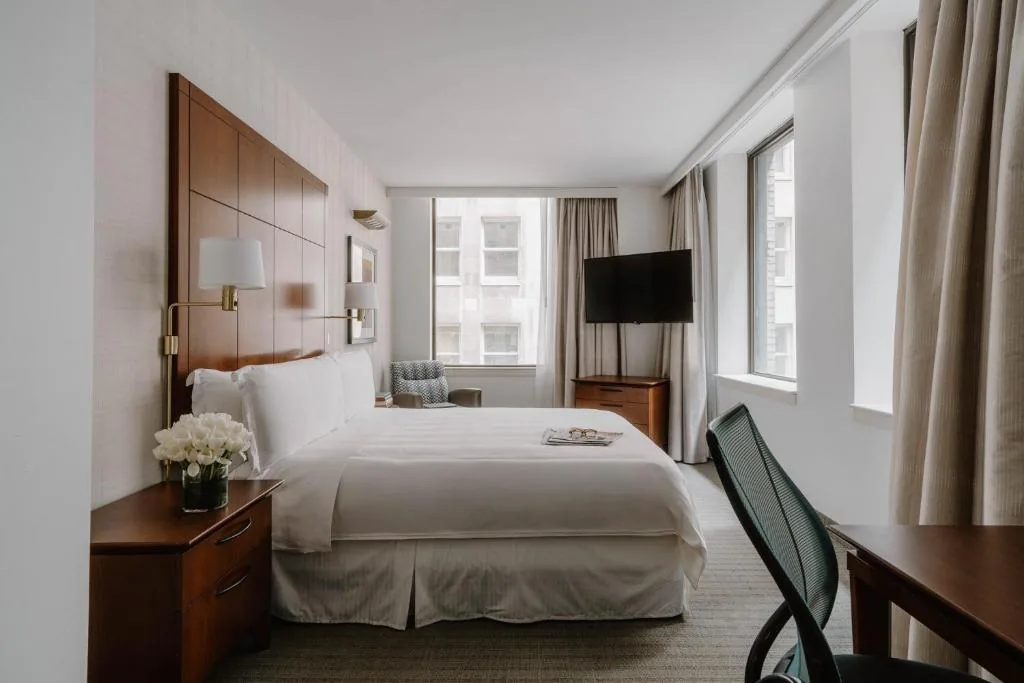
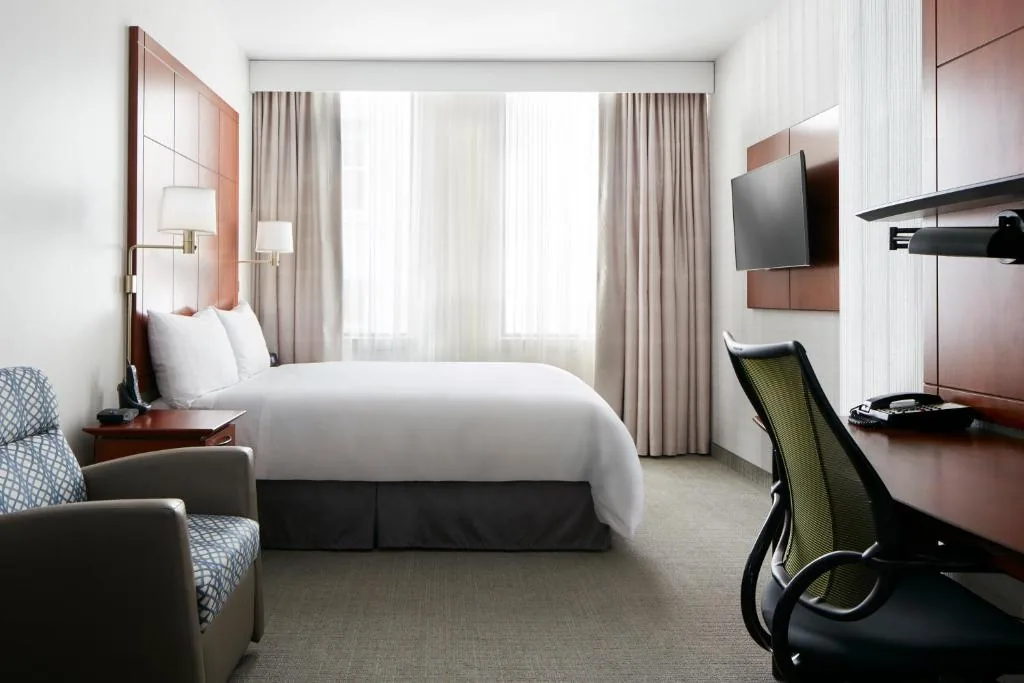
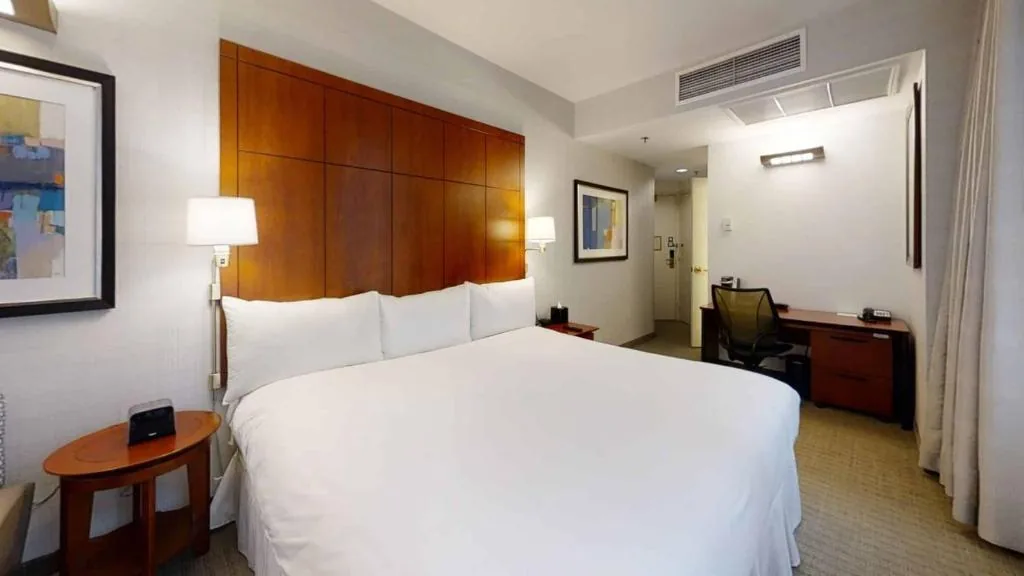
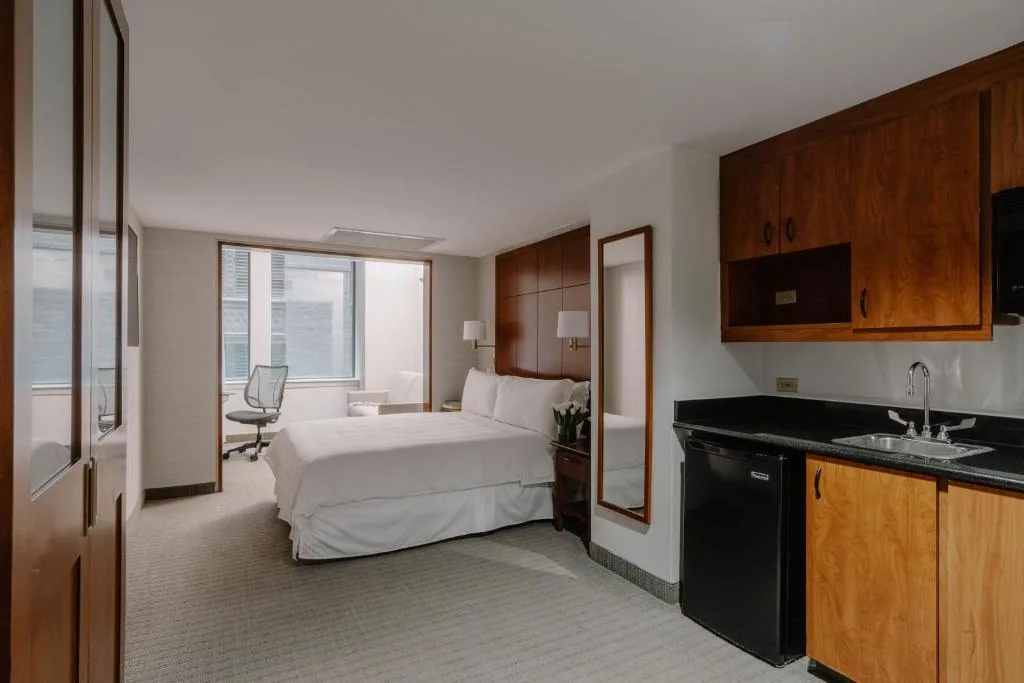
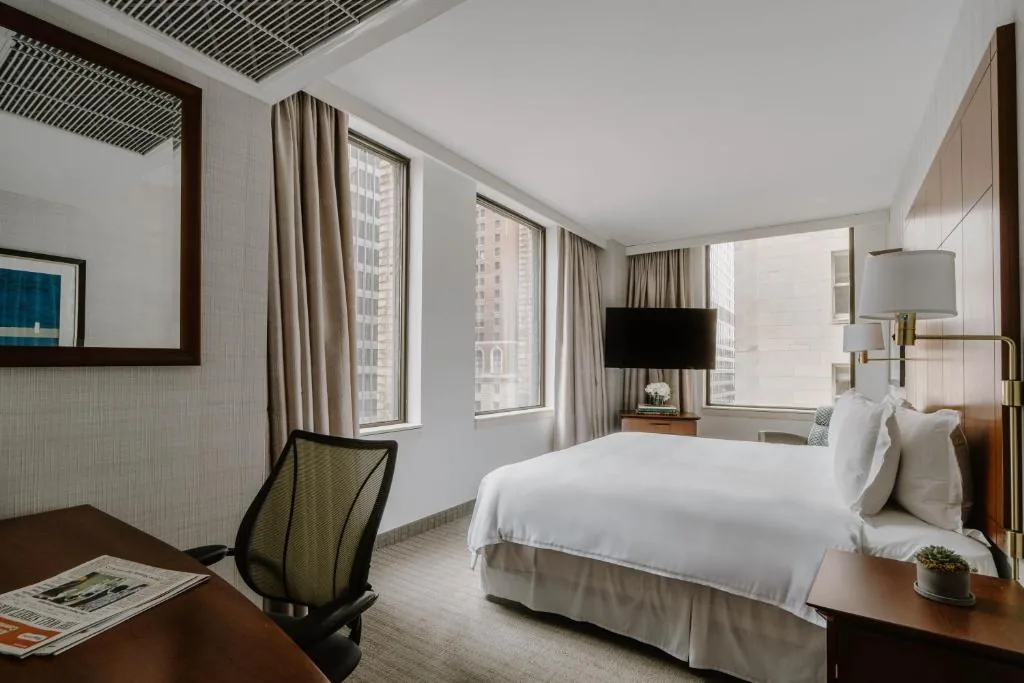
- Straightforward, comfortable rooms at a sensible price, with the Elephant & Castle British pub downstairs for room service and a pint.
- Walkable to Symphony Center, Willis Tower and its Skydeck, the Riverwalk, and Millennium Park.
What to keep in mind
- Rooms are efficient — comfortable but compact
- The Financial District is quieter on weekends
Best for Business travelers and sightseers who want a no-fuss, well-located base in the heart of the Loop — close to the landmark architecture and an easy walk to the lakefront museums.
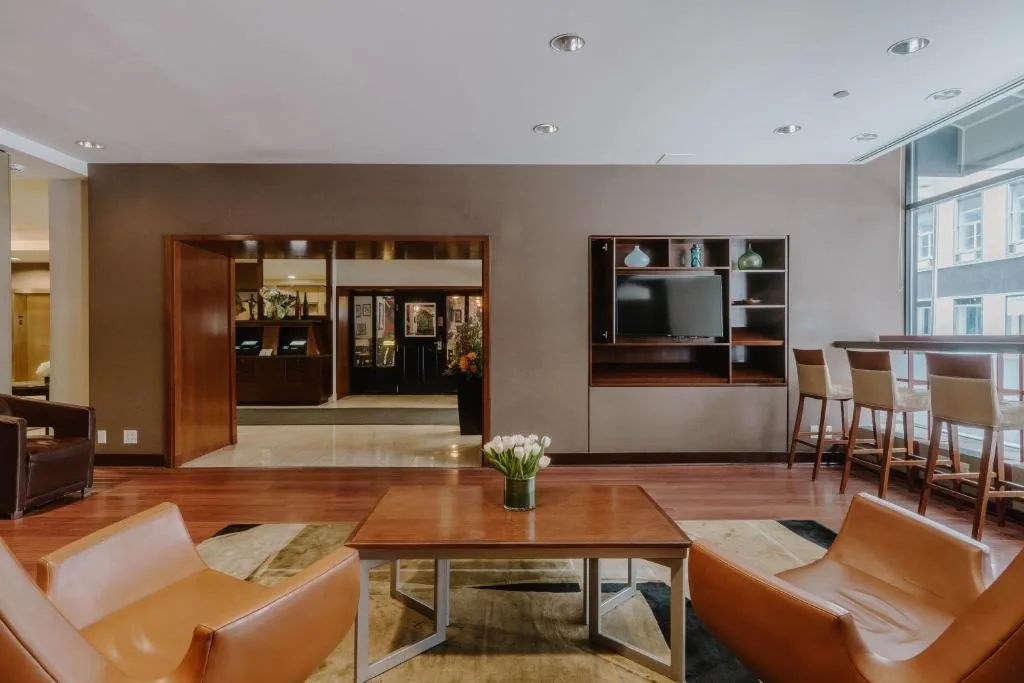
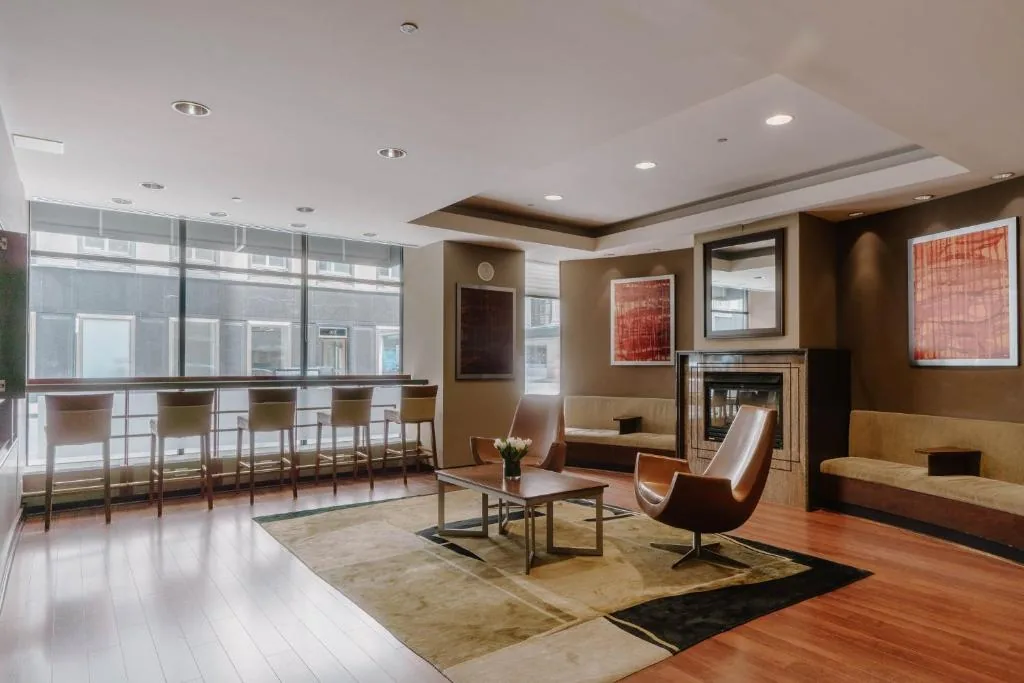
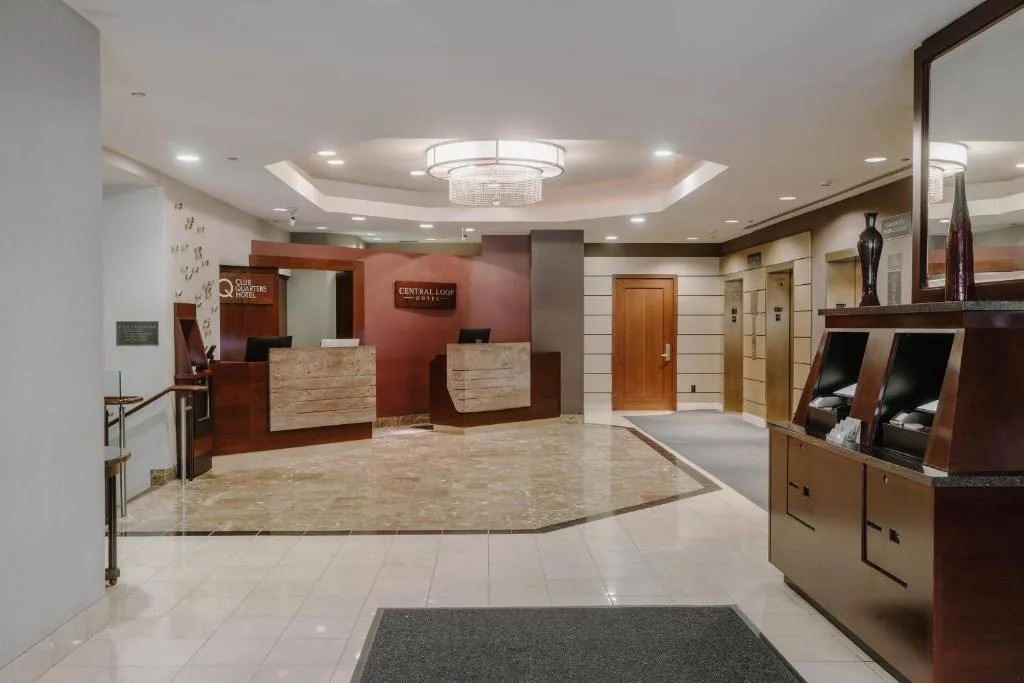
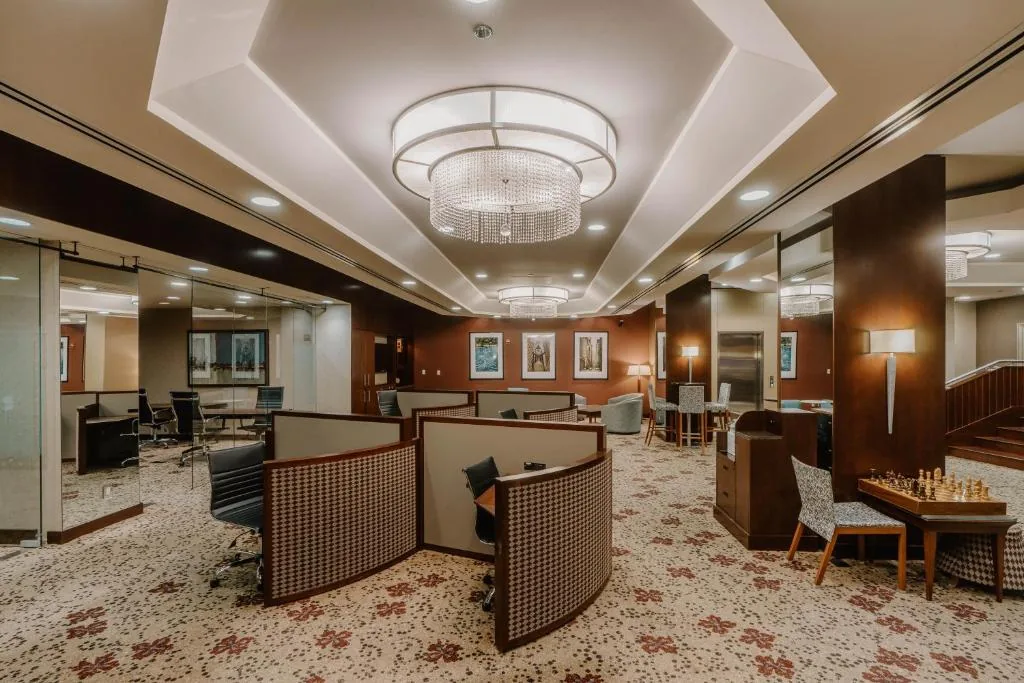
Summary of guest reviews. Sources: Club Quarters Hotel, Central Loop, Commission on Chicago Landmarks, Preservation Chicago. Photography courtesy of Club Quarters Hotel, Central Loop, Chicago, used with permission. Designation report: Bankers Building (L-403) at Chicago Landmark Reports. Details may change over time.
Why this building matters
The hotel occupies the Bankers Building (also known as the Clark Adams Building), a 41-story, 476-foot Art Deco tower completed in 1927 and designed by the Burnham Brothers — the firm led by Hubert Burnham and Daniel Burnham Jr., sons of Daniel Burnham of the celebrated Plan of Chicago . The same firm gave the city the landmark Carbide & Carbon Building. Adapted for reuse as a hotel, the tower stands on Adams Street beside the 1888 Rookery, in the dense, canyon-like stretch of the Loop where the modern skyscraper was born — a short walk from Willis Tower, the Board of Trade, Symphony Center, and the Art Institute. Preservation Chicago has been advocating for the Bankers Building’s designation as a Chicago Landmark — an important step toward securing its long-term restoration and reuse.
Two hundred and forty working days
The contract was signed in July 1926. That September the six-story building already on the site came down while the caissons for the new one were going in — seventy of them, sunk a hundred feet to bedrock. The steel frame started rising in November and was topped out by February. Masonry was finished in April, and people moved in that summer.
Contemporary accounts put the whole job at 240 working days. It was, when it opened in 1927, the tallest building in Chicago’s financial district and the fourth tallest in the city — 41 stories, 476 feet, four hundred thousand square feet of offices.
The man behind it had an unlikely CV. Ernest A. Jackson was born in Iowa in 1882, the son of the state’s governor, spent his early working life in the cattle business in Texas, and then sold land along the Chicago & North Western Railway in South Dakota. He arrived in Chicago in 1924, started buying Loop buildings, and this is the only one he is known to have commissioned. He paid for it the way the 1920s paid for things: by selling real-estate bonds to the public, like stock.
The other answer to the 1923 ordinance
Chicago’s first zoning ordinance, in 1923, let buildings rise above 264 feet only as towers on part of the lot. The architectural historian Carol Willis identified two ways Chicago architects answered that, and you can stay in examples of both.
The first was a blocky full-lot base with a thin tower on top — the Carbide and Carbon Building and Mather Tower are the two you can book.
The Bankers Building was the other, and the designation report says it was the first building to do it, in 1927: one central tower rising out of a low base, flanked by tall wings, with the light courts cut into the outside of the building rather than buried in the middle. The base fills the half-block; from the fifth floor to the twenty-fifth, courts carved into the east and west faces turn the plan into an H; above the twenty-sixth it steps back again into a plain rectangular tower. The Chicago Board of Trade and the Field Building followed the same idea.
Its architects were Daniel Burnham Jr. and Hubert Burnham, sons of the Daniel Burnham who built the bank block on LaSalle — and who would go on to bring the Century of Progress Exposition to Chicago in 1933.
Two details worth finding at street level: the ornament is Classical, not Art Deco, and almost all of it is on the lower floors, cast in stone rather than carved. Look for a pair of crouching male figures. Much of the terracotta that once finished the top has been lost.
Drawn from the building’s Chicago Landmark designation report, adopted October 2025. Read the report →
Explore more like this
Art Deco hotels in Chicago · more landmark buildings reborn as hotels · Loop hotels near Millennium Park