


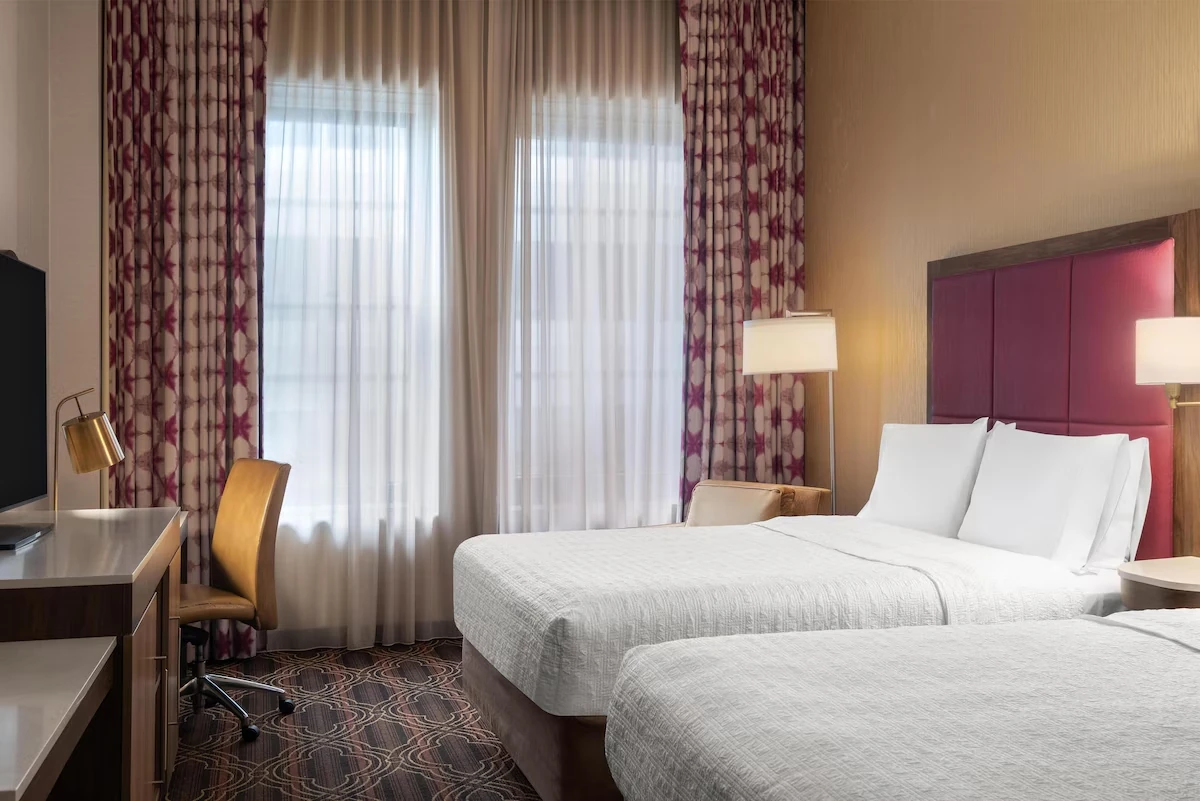


What guests are saying
What guests love
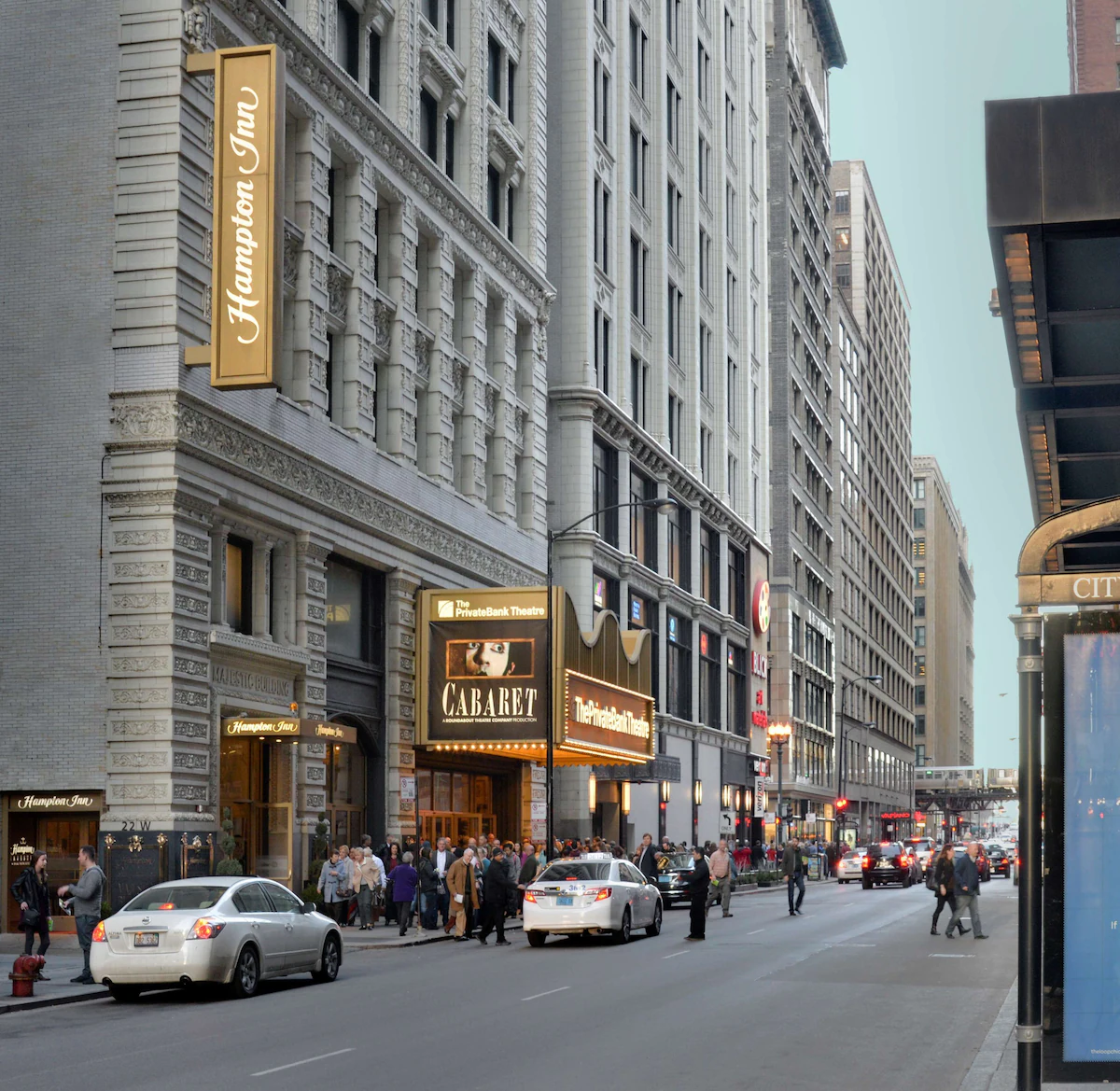
- A genuine theatre-district address — steps from the CIBC, Auditorium, and Palace theaters.
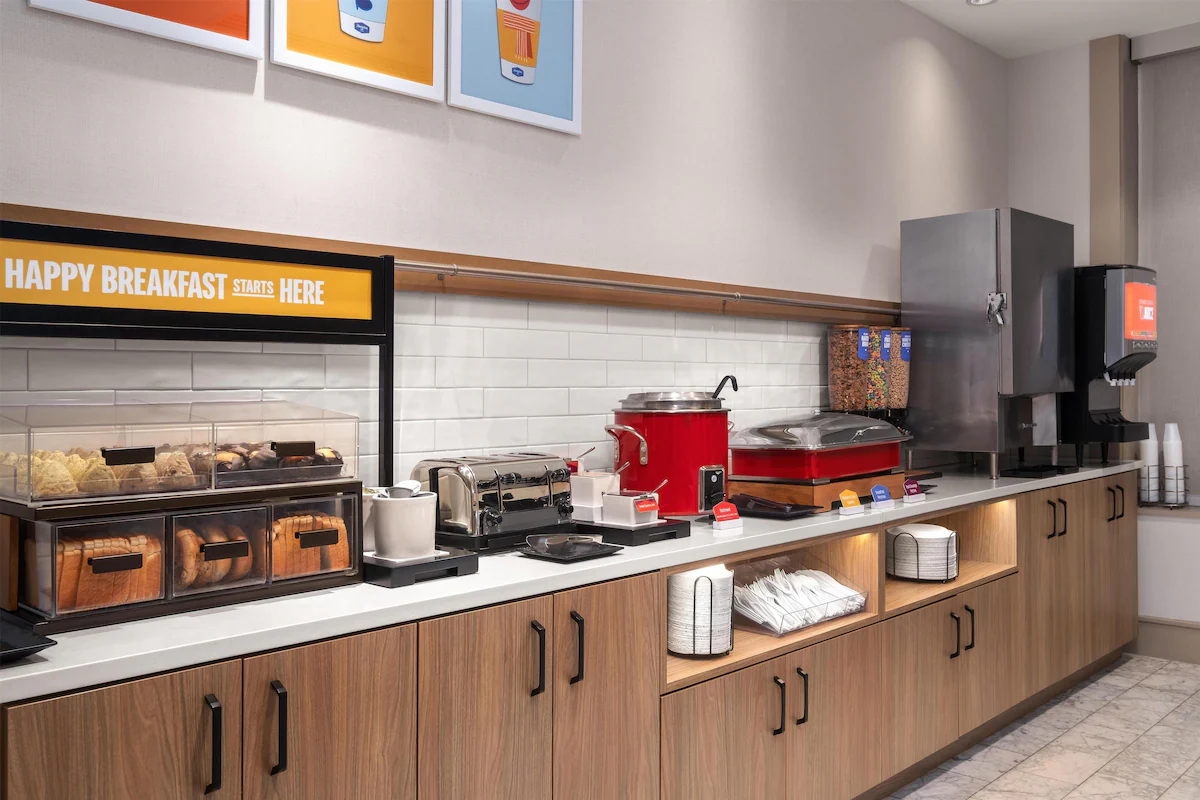
- Dependable comfort and included breakfast in a historic 1906 building.
- Central Loop location near Millennium Park, the Art Institute, and the L.
What to keep in mind
- A historic building — rooms vary in size
- A busy theatre-district block, especially on show nights
Best for Theater-goers and value-minded travelers who want a comfortable, well-located base in a building steeped in stage history.
Summary of guest reviews. Sources: The quoted assessments, the facade description and the designation from the Majestic Building and Theater designation report (L-138) (Commission on Chicago Landmarks), pp. 1, 3, 9, 18 and 21. Majestic Theater Hampton Inn, Commission on Chicago Landmarks, Preservation Chicago. Photography courtesy of Hampton Inn Majestic Chicago Theatre District, used with permission. Details may change over time.
Why this building matters
Completed in 1906 to the designs of Edmund R. Krause, the Majestic Building paired a vaudeville theater with an office tower above it, a combination its designation report attributes to the expensive land values in Chicago’s Loop. At twenty stories it was the tallest building in Chicago when it opened. The theater lives on as the CIBC Theatre, and the upper floors, built as offices, are now a Hampton Inn, a few steps from the city’s great stages.
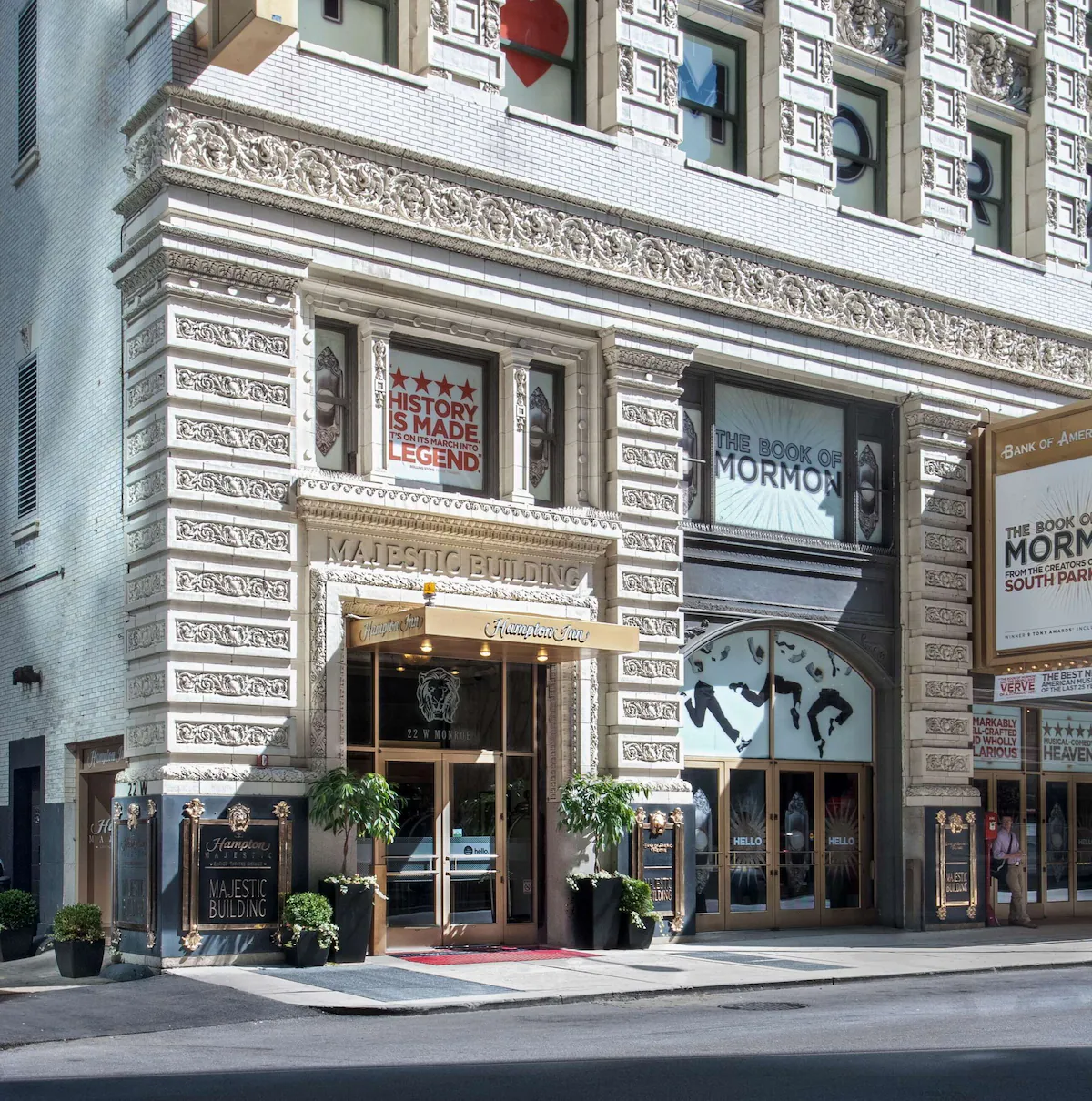
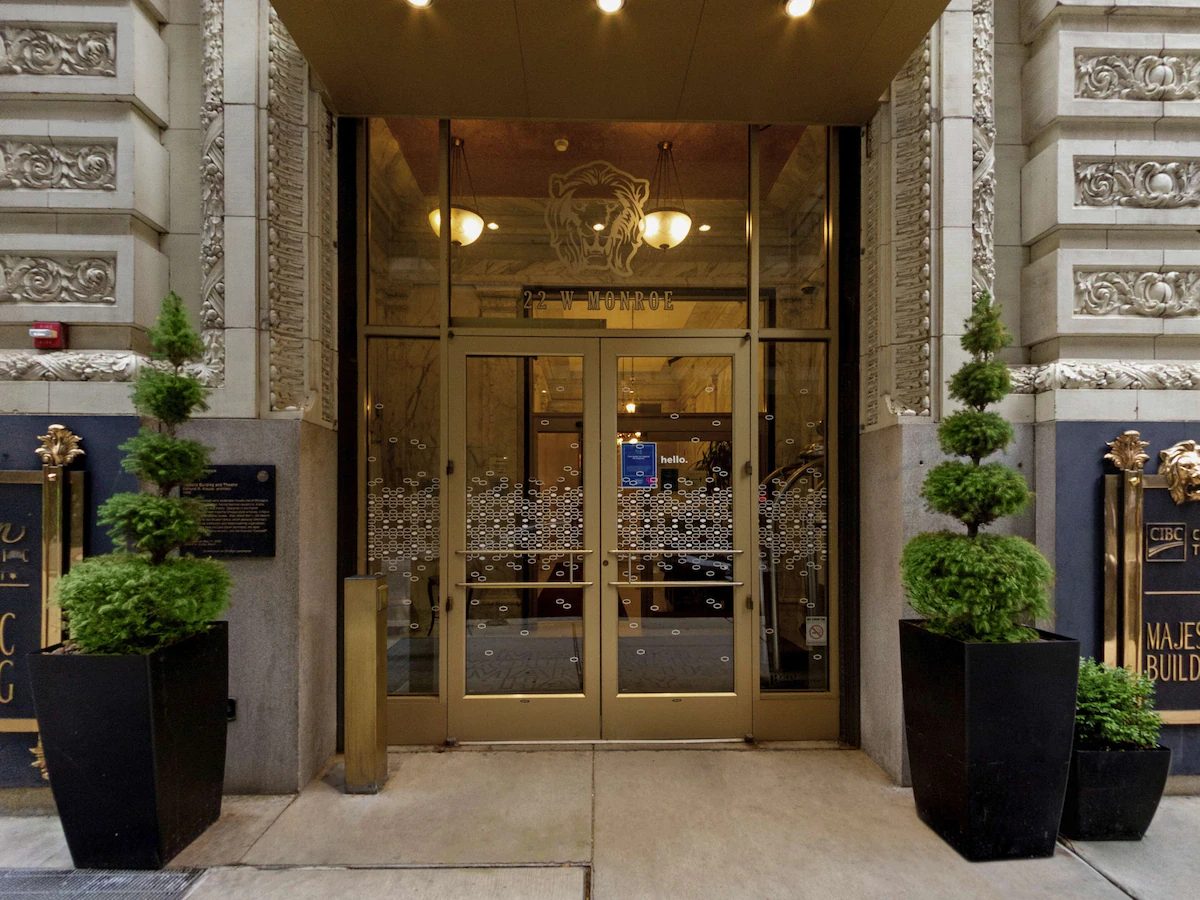
Its own designation report is unusually direct about the building’s standing. The Majestic Building and Theater, it says, “is one of Chicago’s handsomest Classical-style office buildings and a monument to Chicago’s significant theater history as one of the city’s oldest legitimate theaters.” The facade, ornate and French Renaissance in manner, is “detailed with finely-crafted terra-cotta decor.”
The report also settles the architect’s reputation on this one commission: it calls the Majestic “the most important building by Chicago architect Edmund Krause.” Designated a Chicago Landmark in 2005.
The tallest building in Chicago
The Majestic was commissioned by the real estate investor Augusta Lehman, and at twenty stories it was the tallest building in the city when it was finished in 1906. The theater fills the base — five stories, 2,008 seats, running 192 feet back from the street — while the office floors above it occupy a footprint of roughly 82 feet of frontage and 62 feet of depth.
The structure rests on caissons of solid concrete piers. Its skeleton is rolled steel, clad in white terra cotta and enameled brick. The Monroe Street front is organized the way early skyscrapers usually were, echoing a classical column with a base at the lower floors, a shaft of offices, and a capital of top floors and cornice.
Built after the Iroquois fire
In December 1903 a fire at the Iroquois Theater killed over 600 people, after sparks from a spotlight caught the curtain in a theater barely a month old. The City wrote new rules, and the Majestic was the first theater built under them.
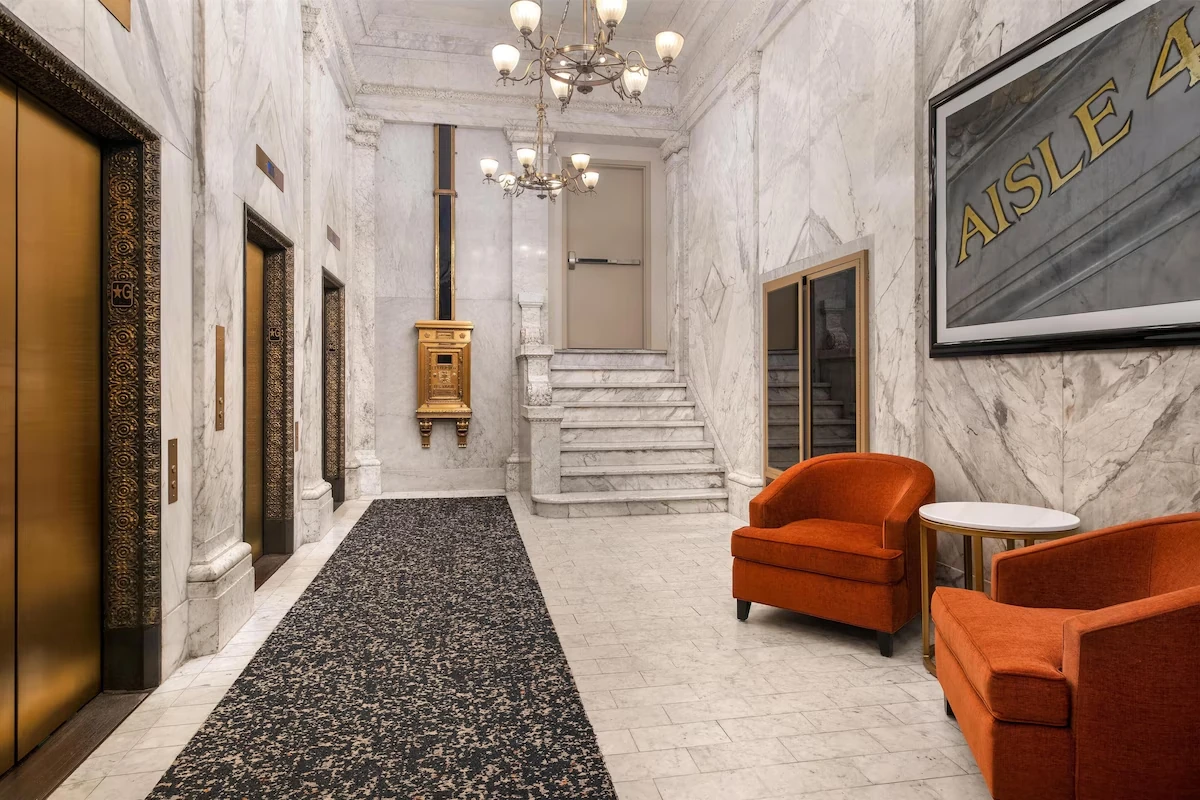
What those rules produced is still visible. Exit doors are clearly marked and fitted with panic bars, the aisles are wider, and the scenery was made of fireproof materials. The terra-cotta cladding was chosen primarily because it does not burn. Inside, the main enclosed stairway was built entirely of iron and marble, and the elevator shafts were enclosed in marble.
French Renaissance, with Sullivan in the details
The Monroe Street facade is clad in extremely ornate terra cotta, its low-relief ornament drawn from the Classical architecture of 16th- and 17th-century Renaissance France. Because the building could be seen from every direction, the side elevations were finished too: the white enameled brick was chosen to match the color of the terra cotta exactly.
The report places the building close to the Chicago School — it has the tripartite Chicago windows and the classically based form — while describing its ornament as a synthesis of French Renaissance exuberance with the nature-derived decoration Louis Sullivan favored. Of the foliated frieze that runs above the second story, the report says plainly that it “proclaims his influence.”
When it was the Shubert
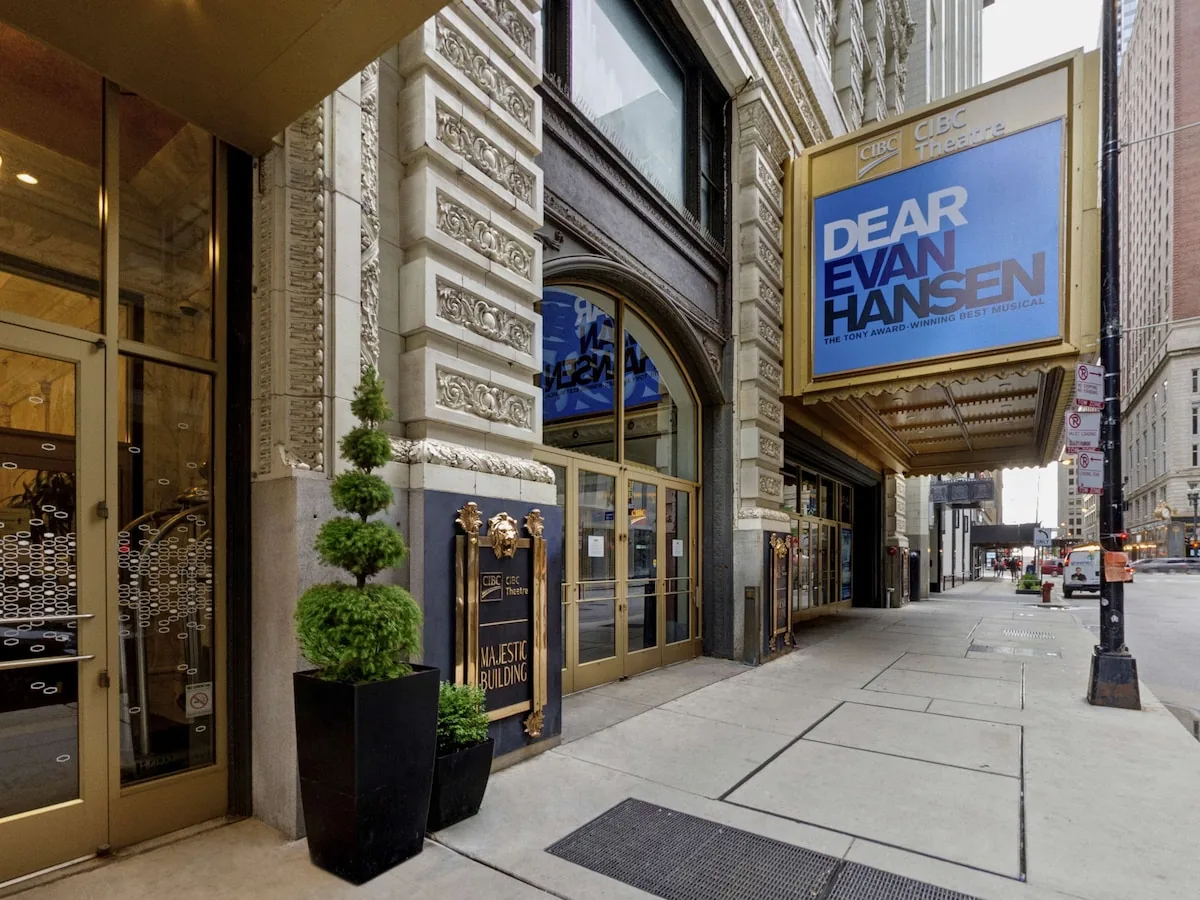
The theater downstairs has had three names, and the middle one lasted longest. It opened as the Majestic Theater, was renamed the Samuel S. Shubert Theater after the Second World War, and trades today as the CIBC Theatre.
Each name marks a change in what played there. As the Majestic it was built to be Chicago’s premier venue for quality vaudeville aimed at middle-class audiences. The Shubert Brothers took over management in the 1920s, and as vaudeville faded the bills turned to musical comedies, melodramas, touring Broadway shows, dance troupes and local productions — the Isadora Duncan Dancers among them. After the war, under the Shubert name, it staged dramatic productions and musicals alone.
Then the Loop’s theaters closed one by one, and this one did not. The designation report records that through the 1970s and ’80s the Shubert was the only venue to remain open.
The list of who worked this stage runs from vaudeville to Broadway. Harry Houdini played it, as did Will Rogers, Eddie Foy and Fanny Brice. Beggar’s Holiday ran in April 1947 with music by Duke Ellington and the orchestra under Billy Strayhorn. My Fair Lady held the stage for sixty-seven weeks in the late 1950s, Hair for a year in 1970, and Julie Andrews appeared here in the pre-Broadway run of Victor/Victoria in the 1990s.
Some of what you walk past is from the Shubert years rather than 1906. The report notes that much of the lobby’s molded wall panelling, its arches and its balustrades may have been added in the 1940s, when the Shubert brothers reopened the theater; the marquee went up in the 1946 renovations. The ornate ceilings, though, are original — plaster moldings of egg-and-dart, beading and acanthus leaf, set between rows of incandescent theater bulbs.
Worth stepping inside for
The CIBC Theatre downstairs shares this building’s landmark designation. Its auditorium is protected, along with portions of the lobby, vestibule and staircases.
Explore more like this
more Gilded Age & Beaux-Arts hotels · more historic hotels near Millennium Park