













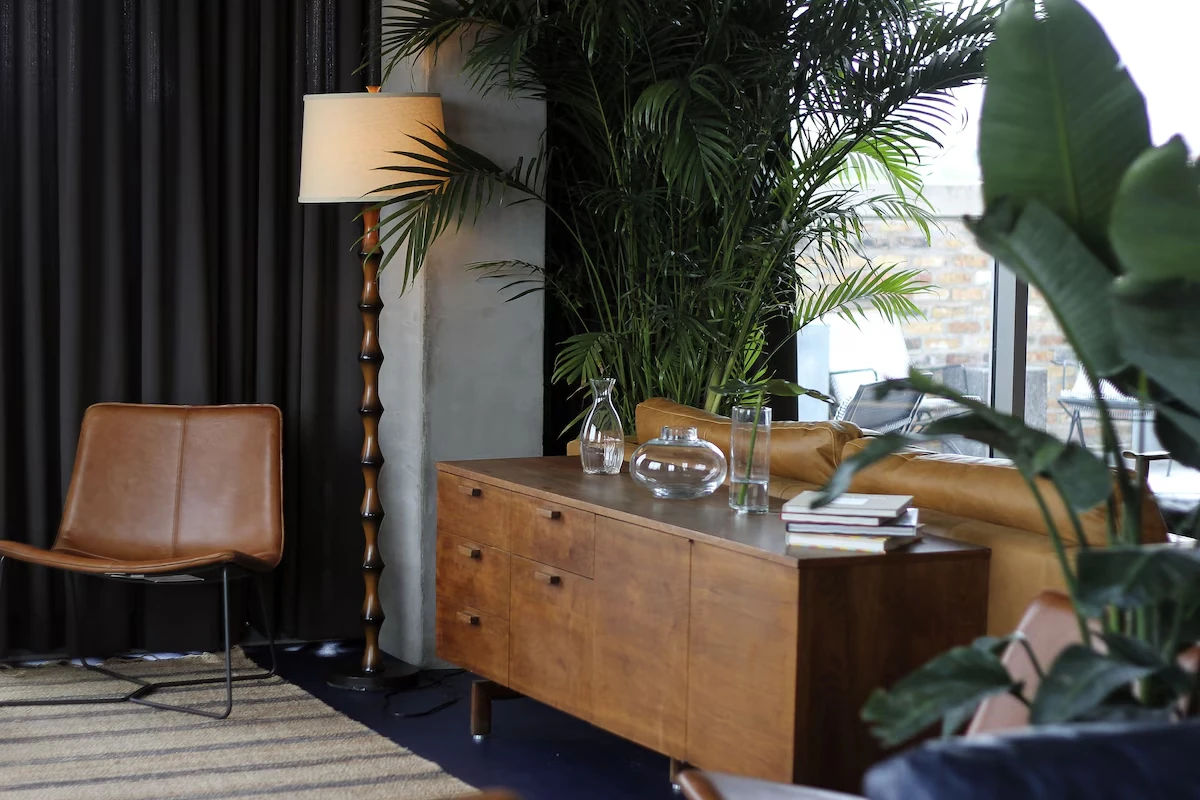
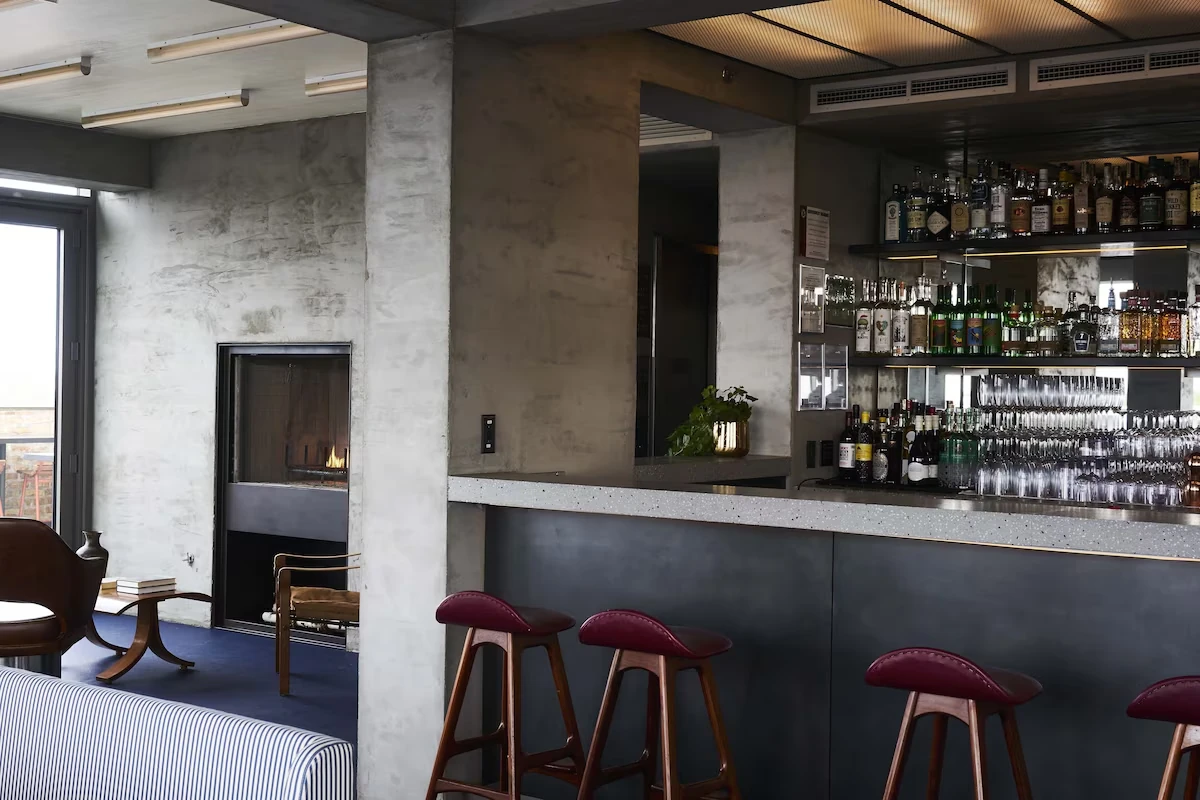
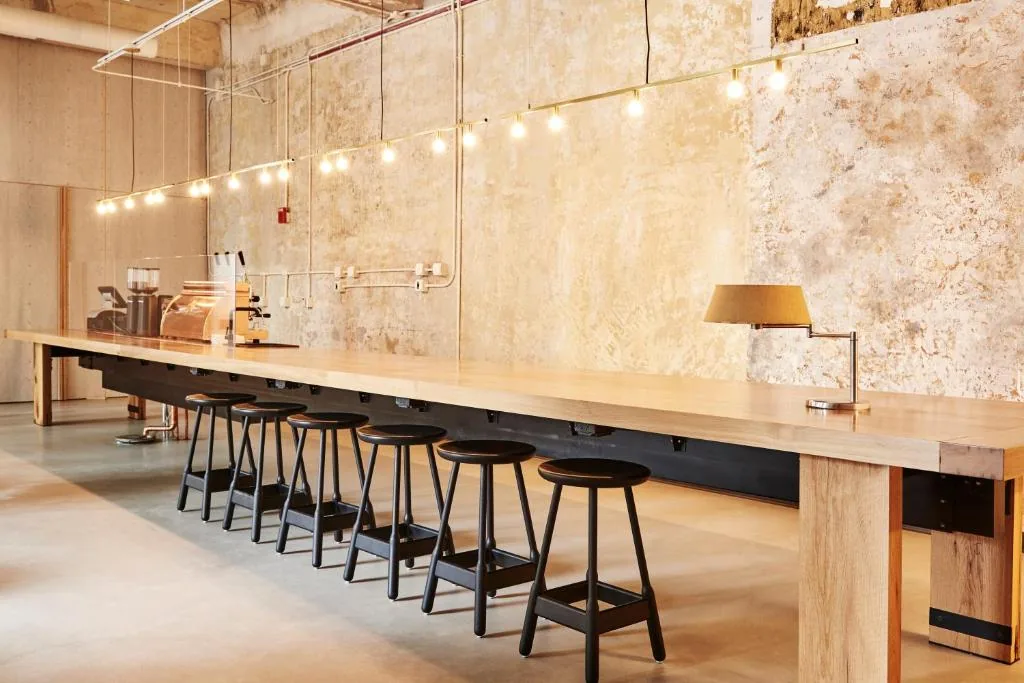
















What guests are saying
What guests love
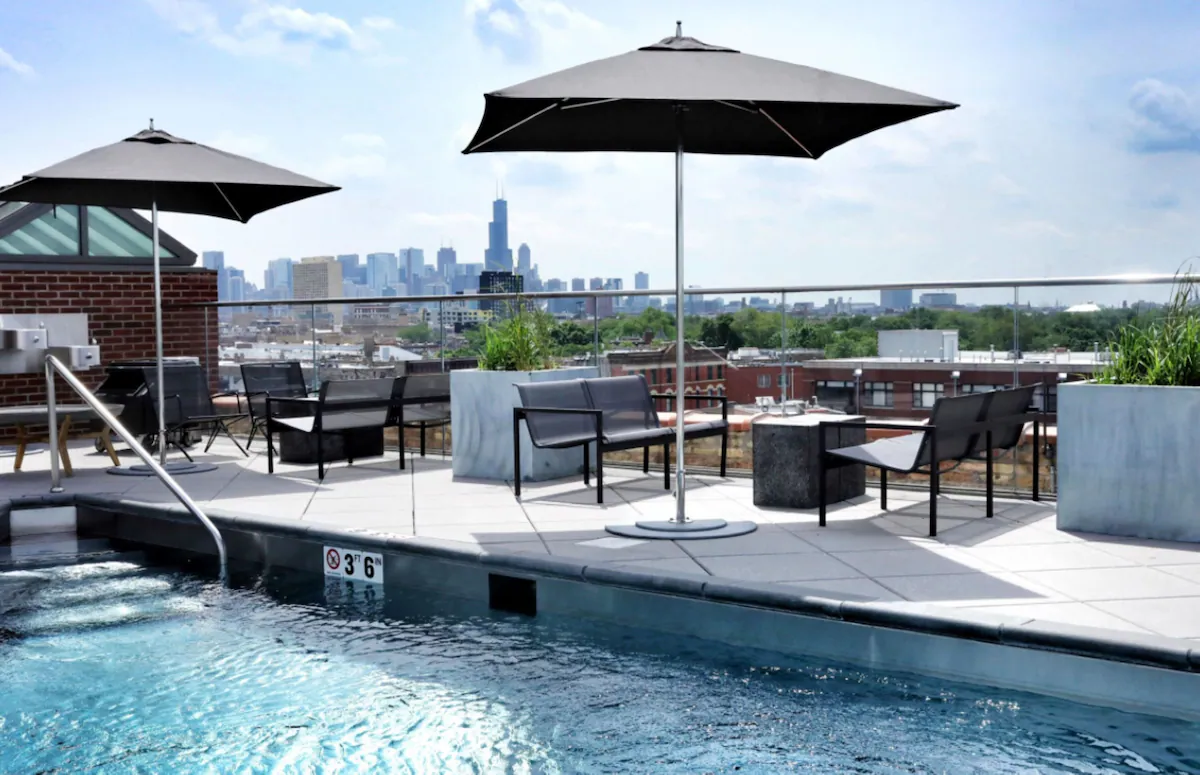
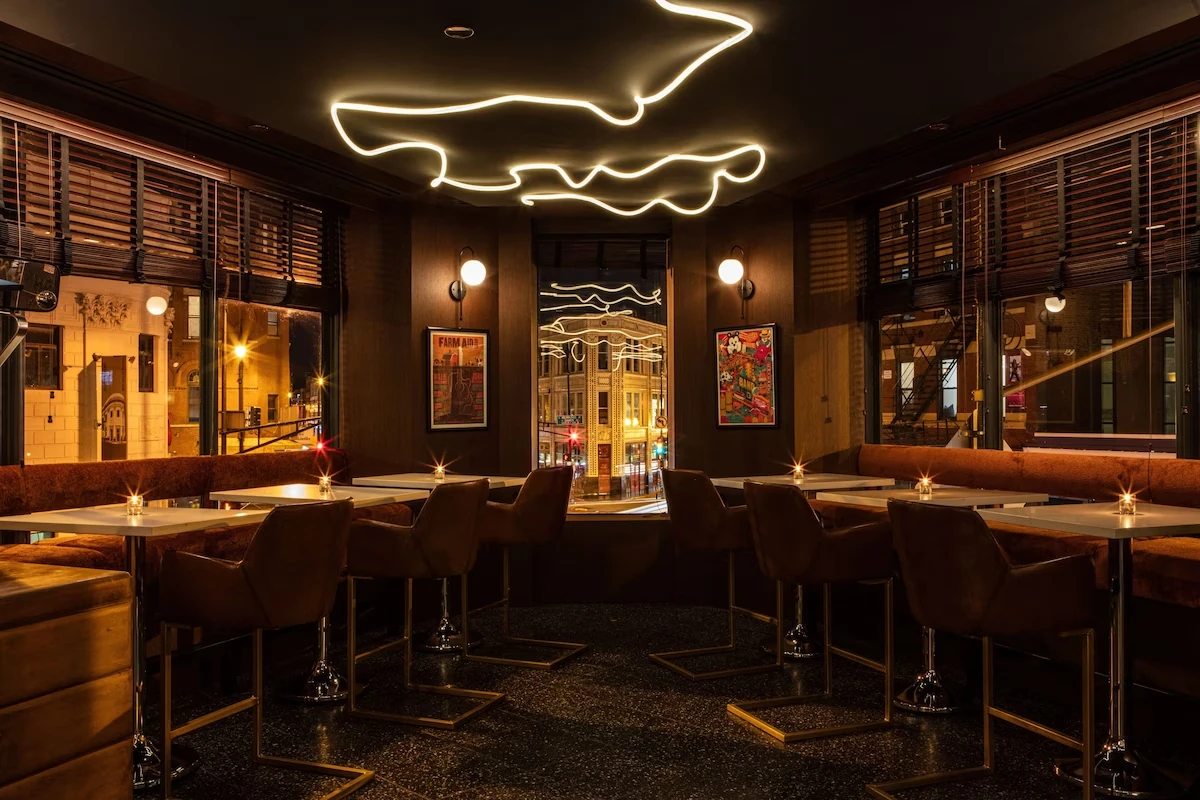
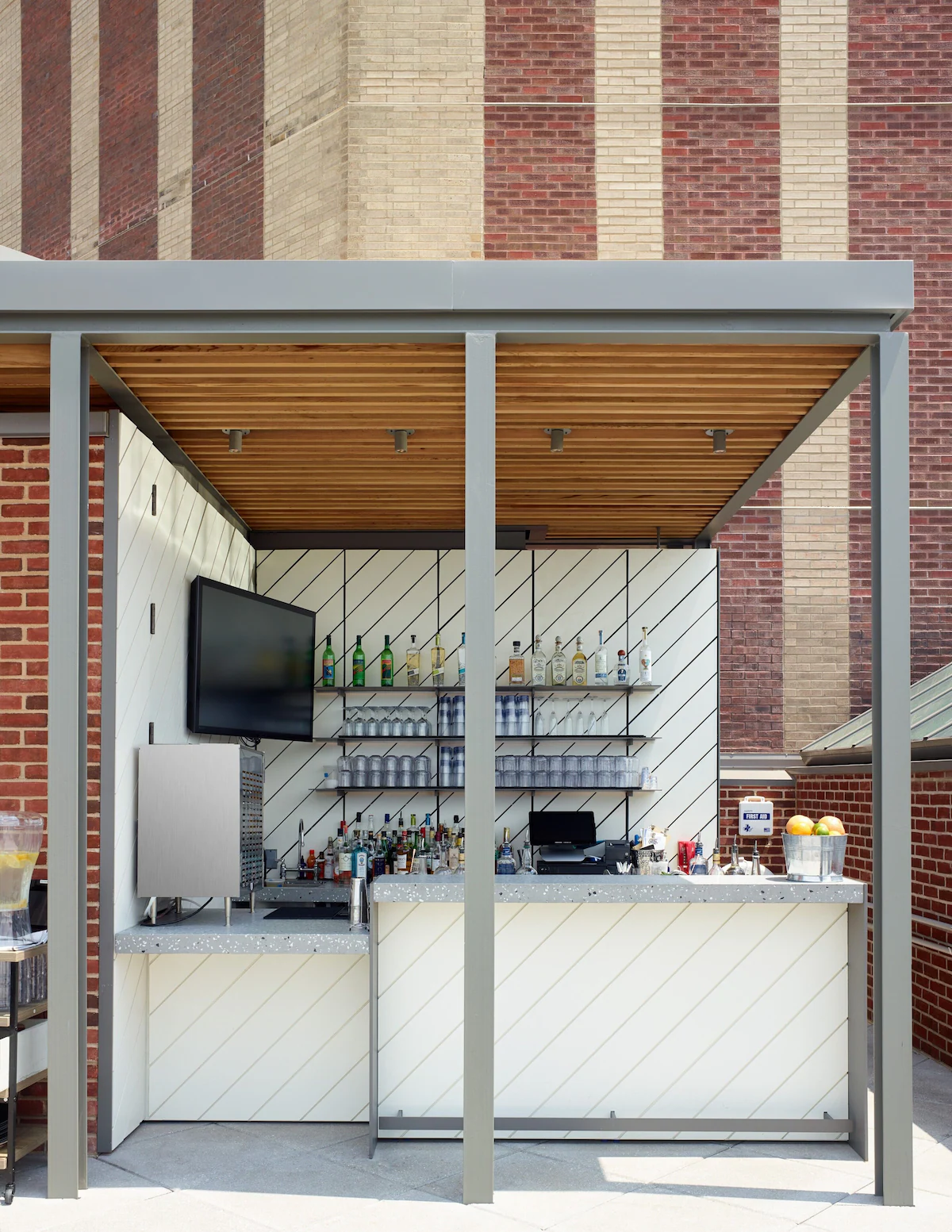
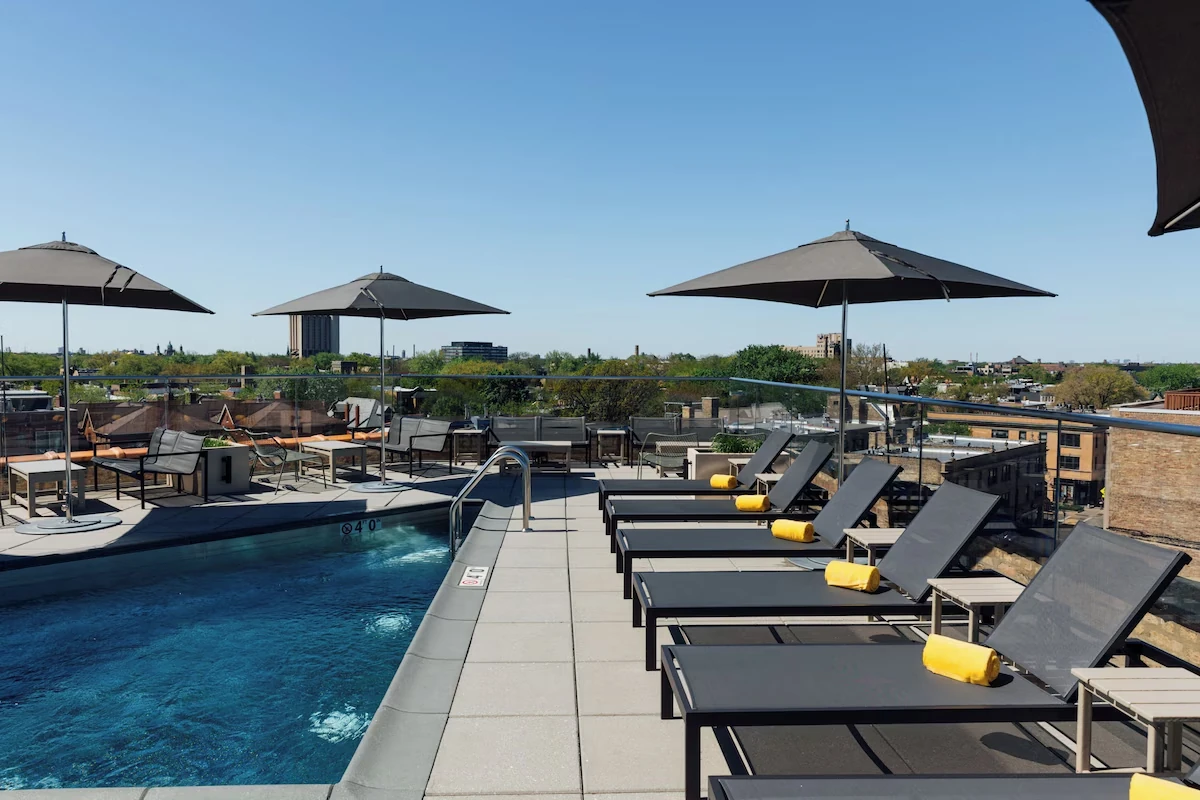
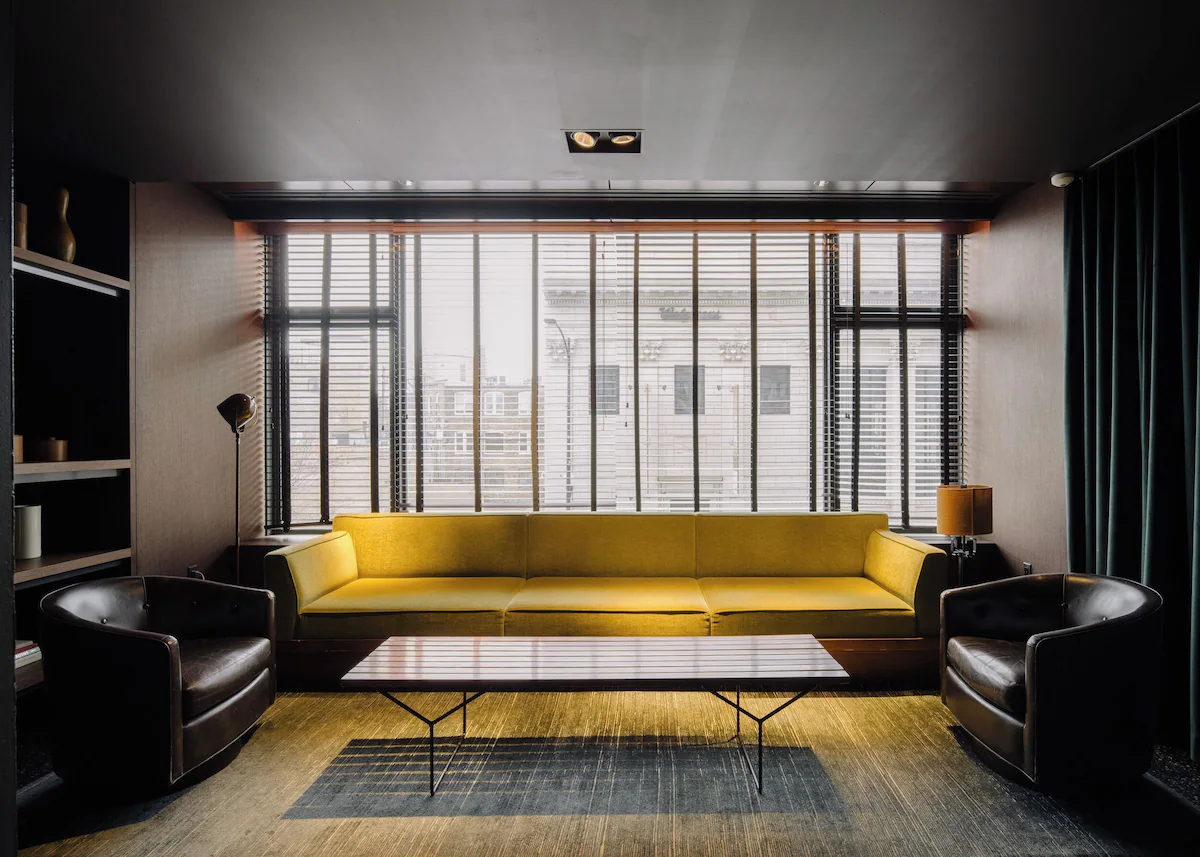
- A genuine Art Deco landmark with a dramatic flatiron silhouette and a beloved rooftop lounge.
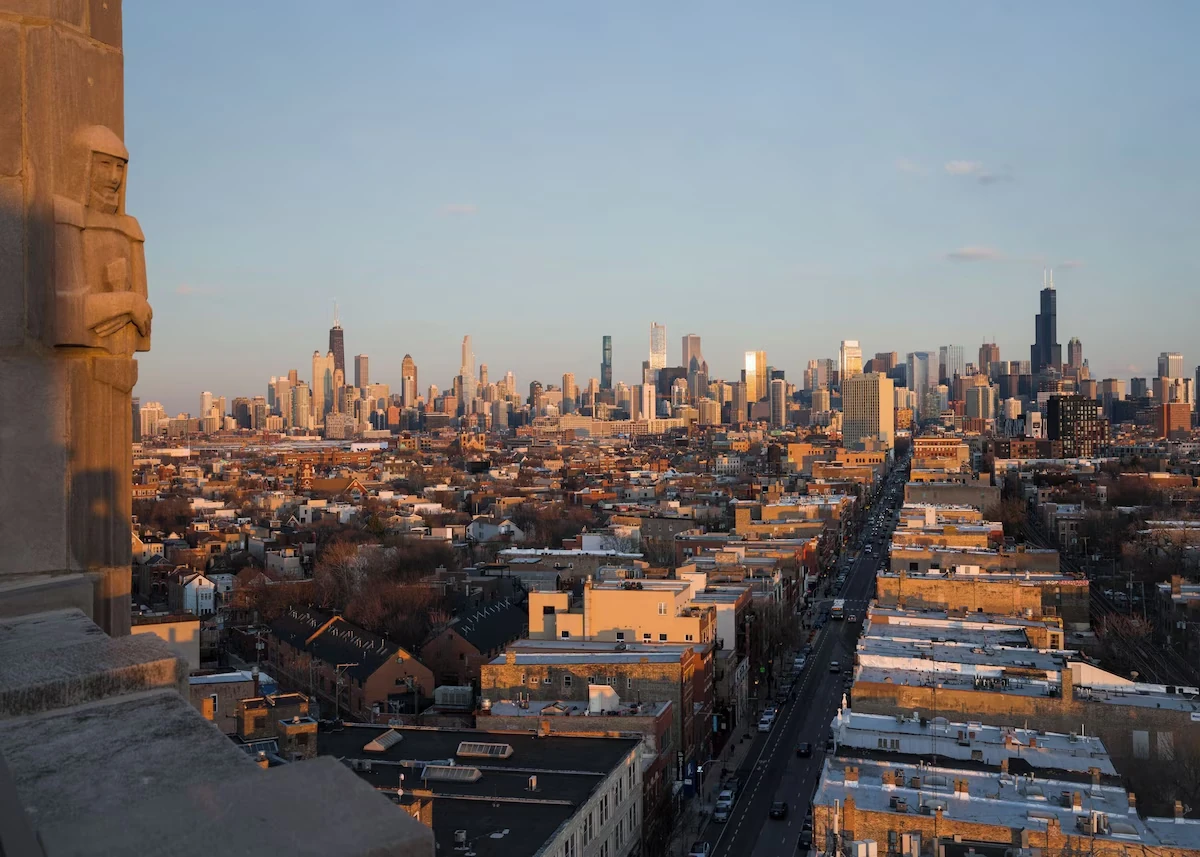
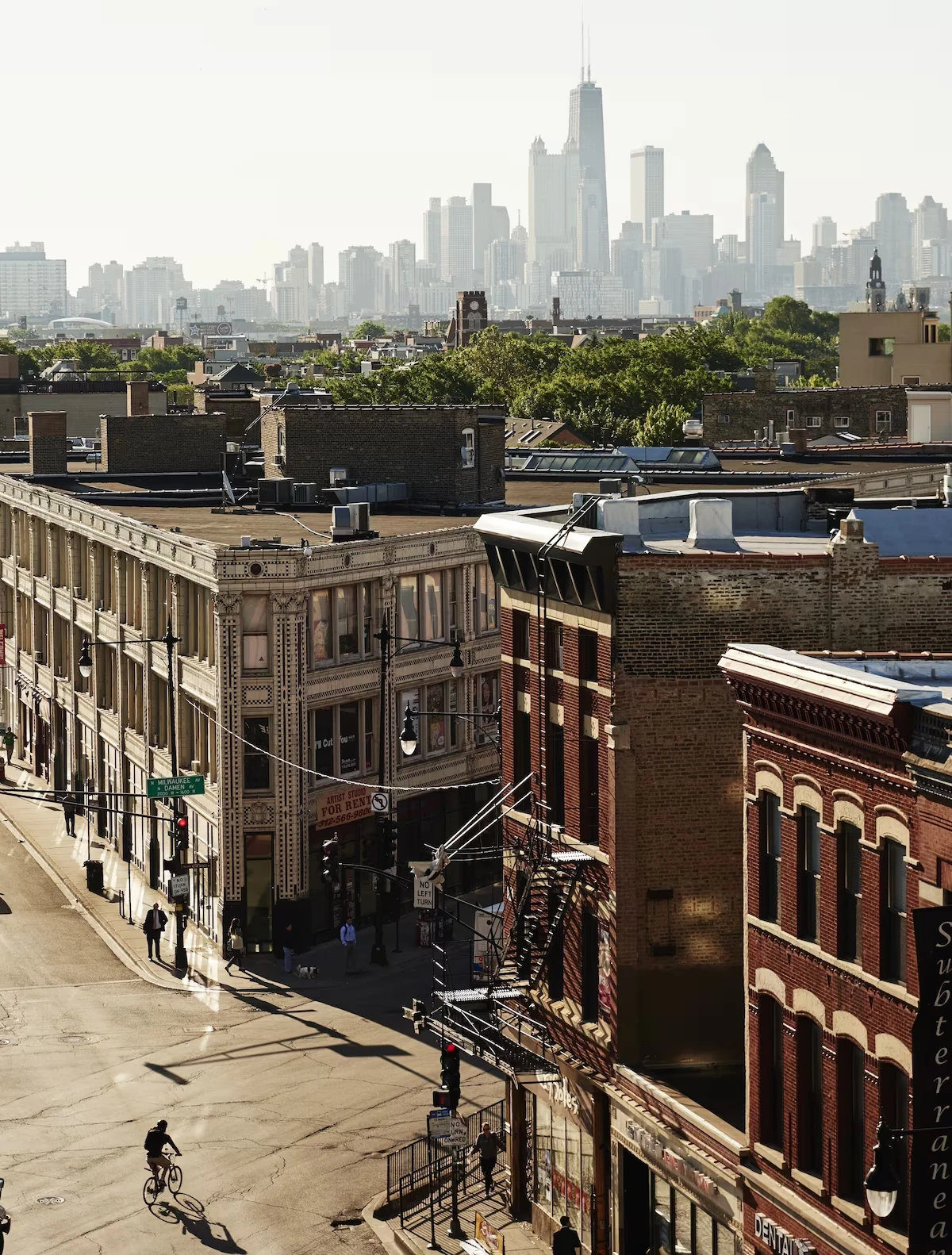
- The energy of Wicker Park — independent shops, restaurants, and music, at the Damen Blue Line stop.
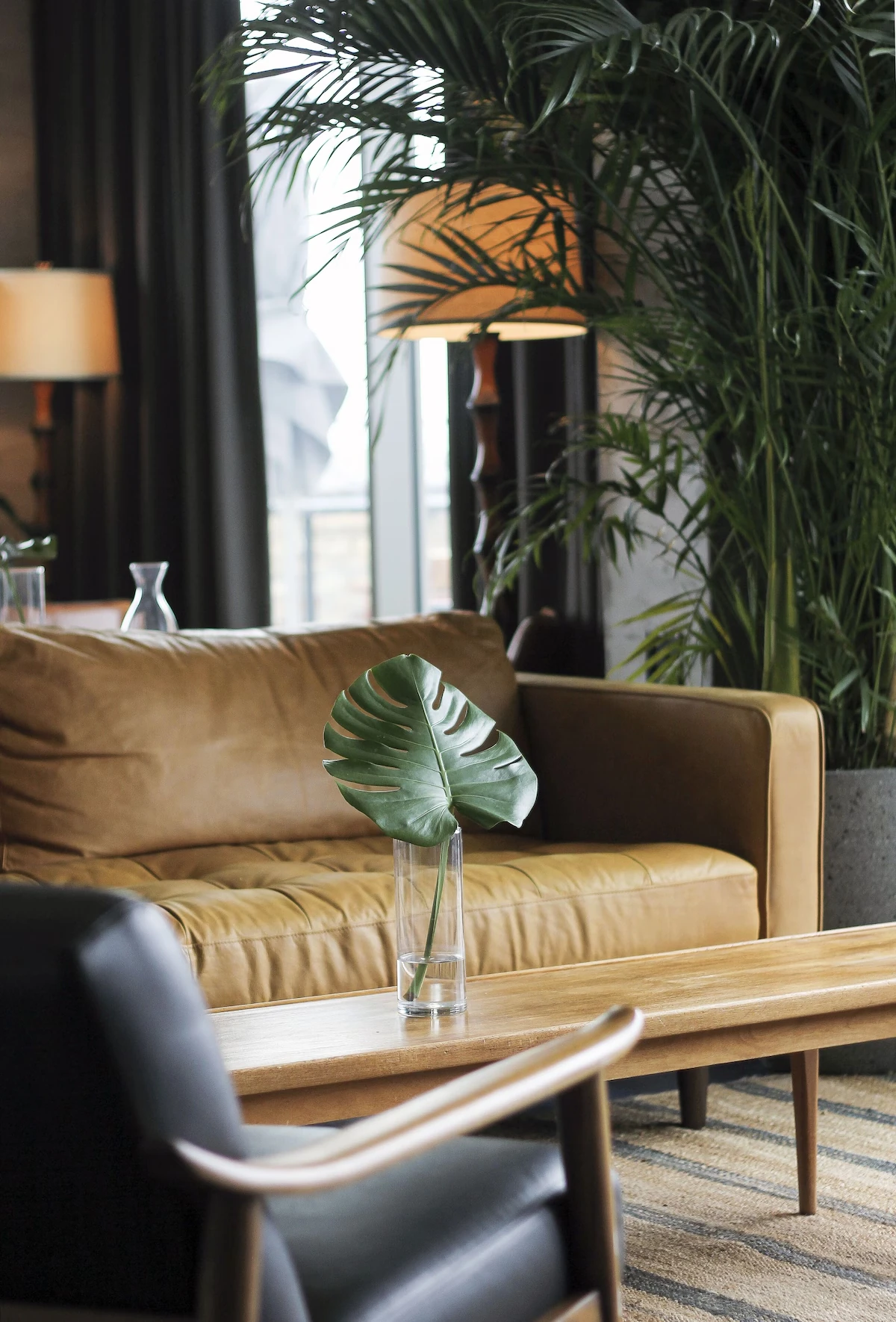
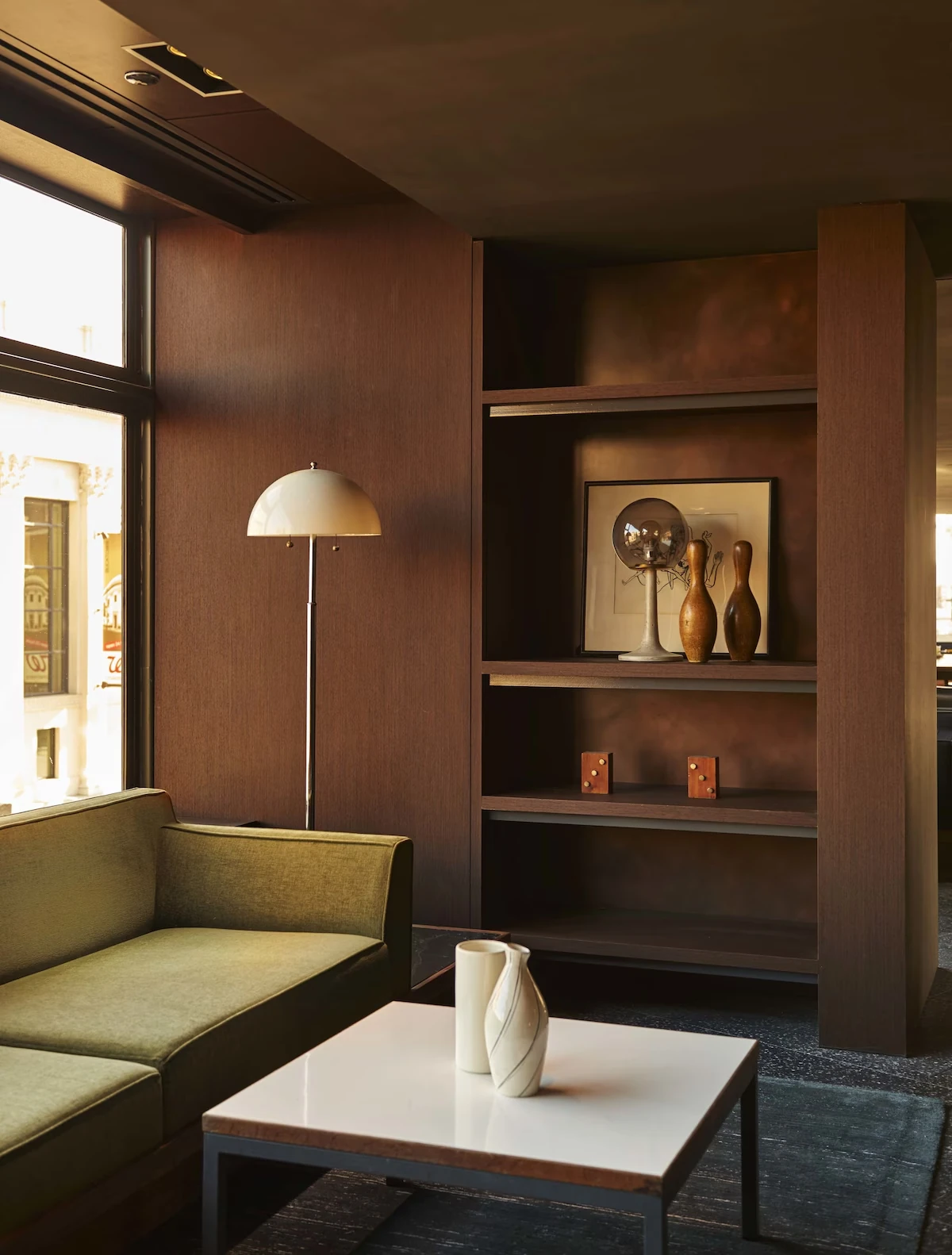
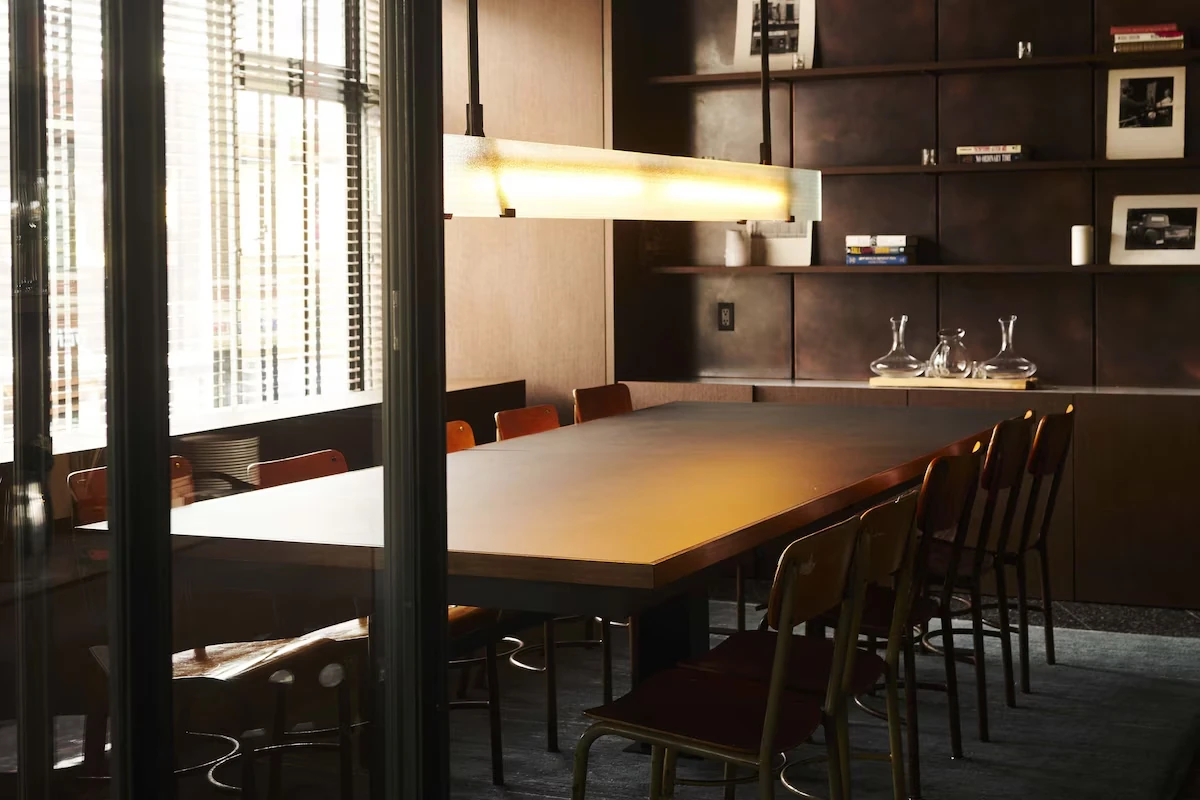
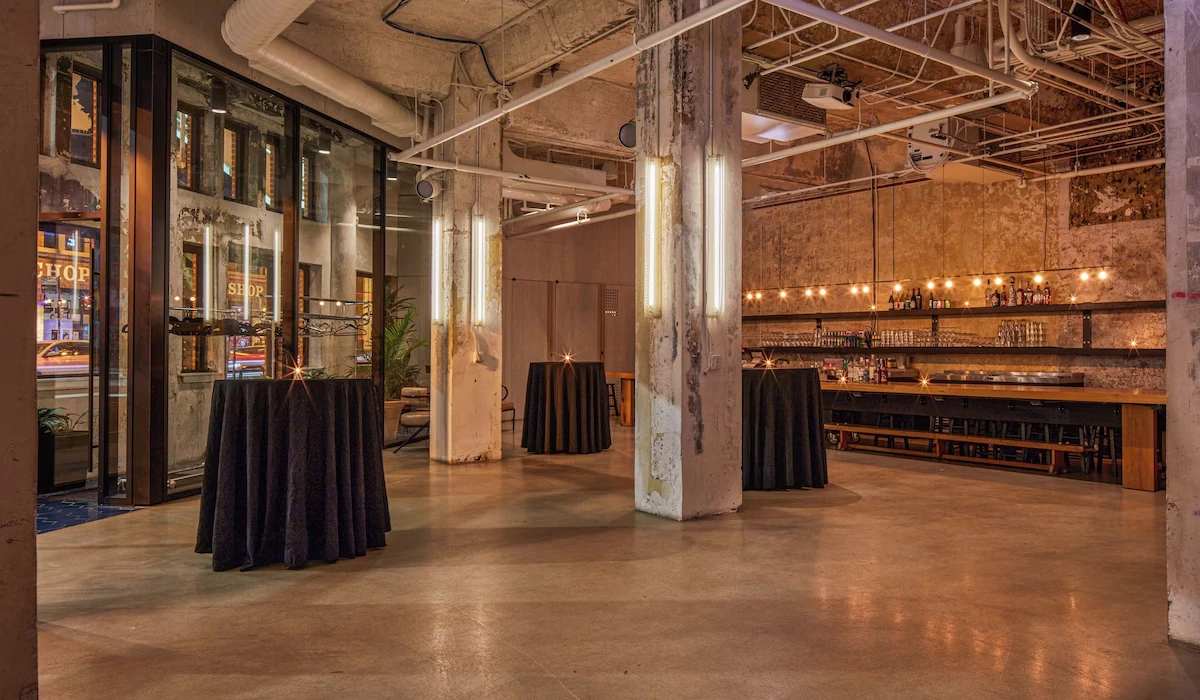
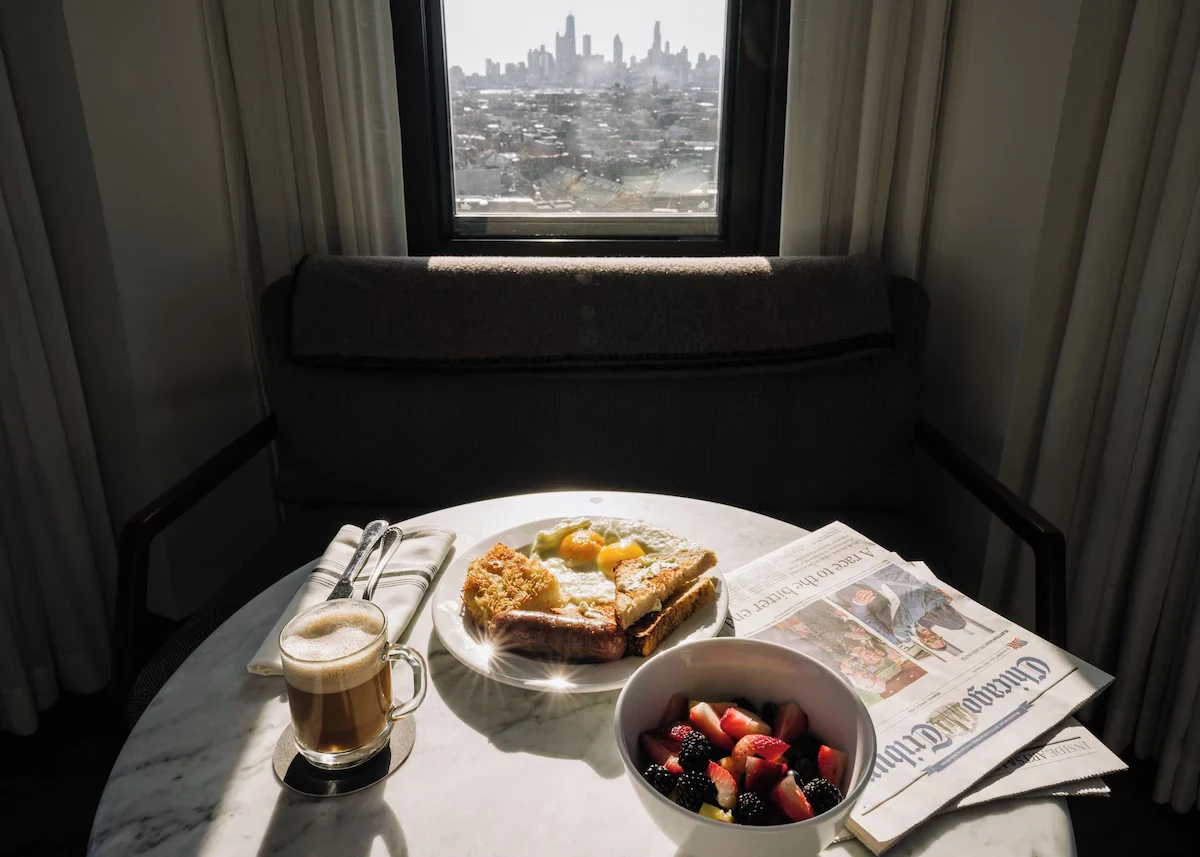
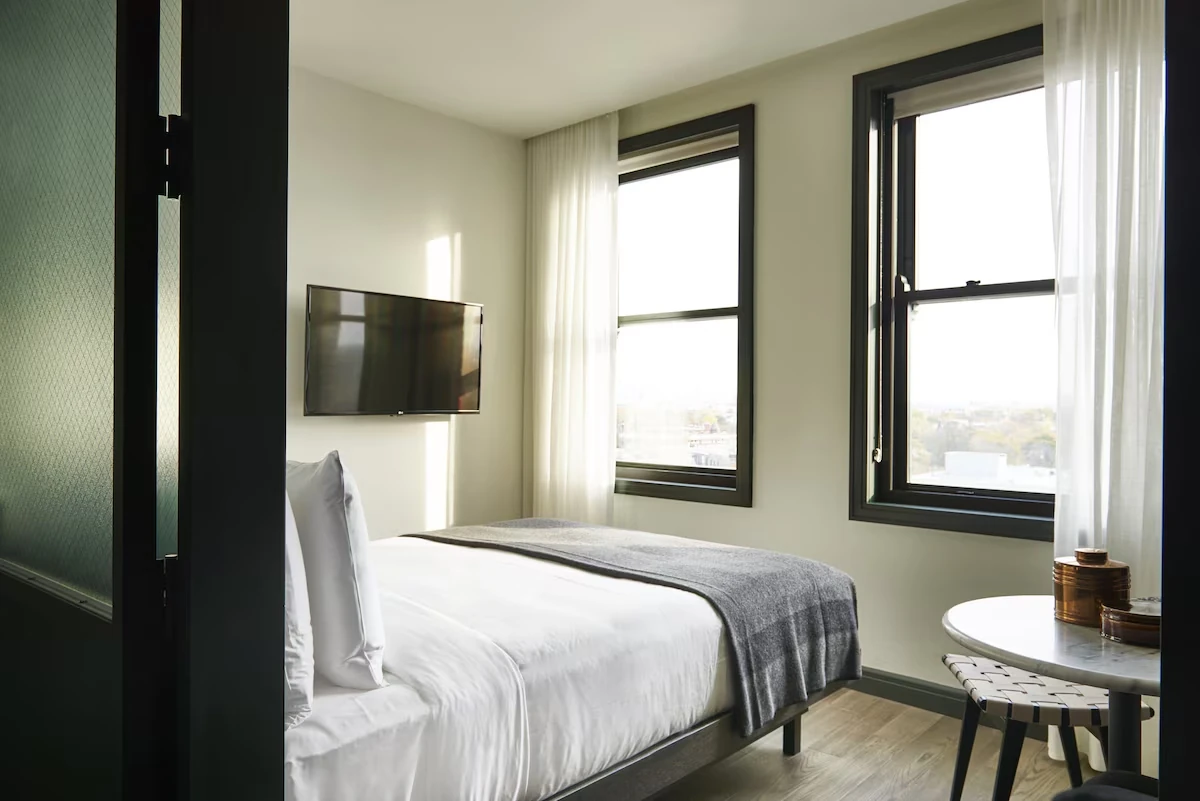
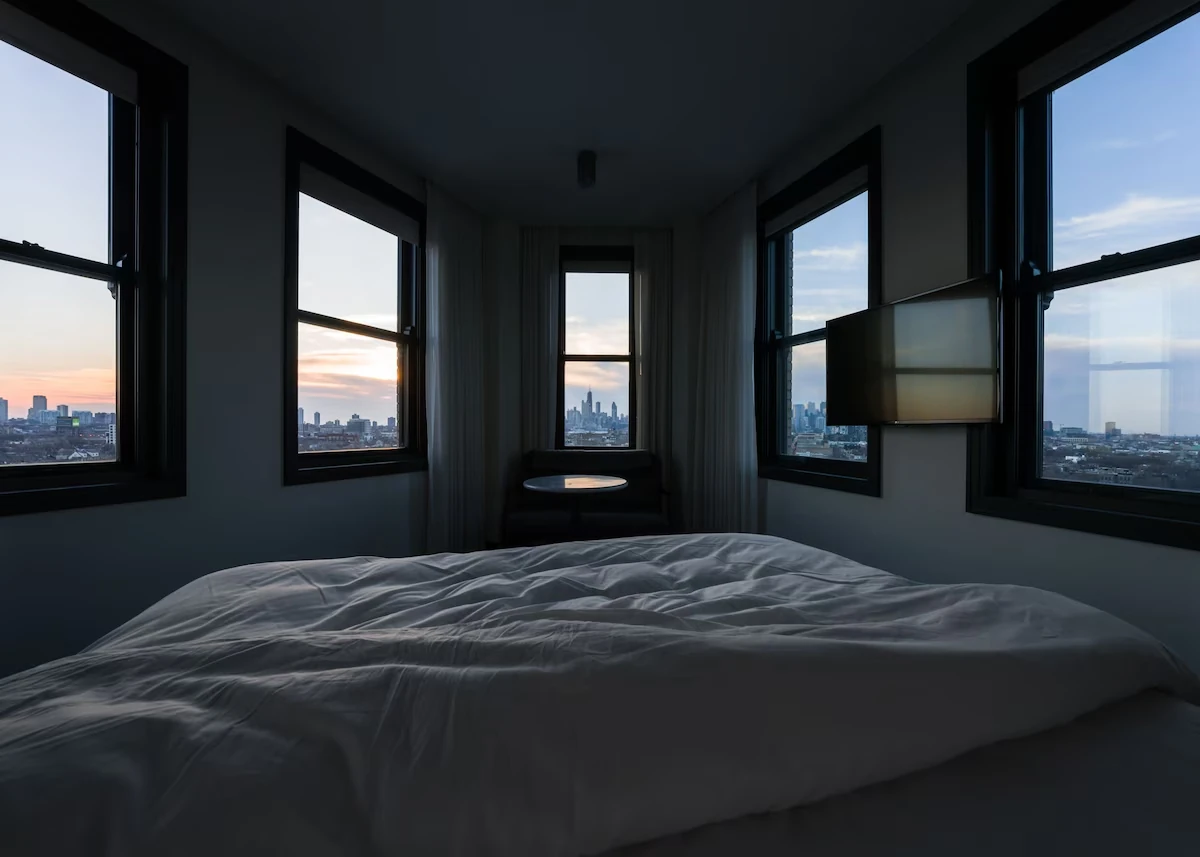
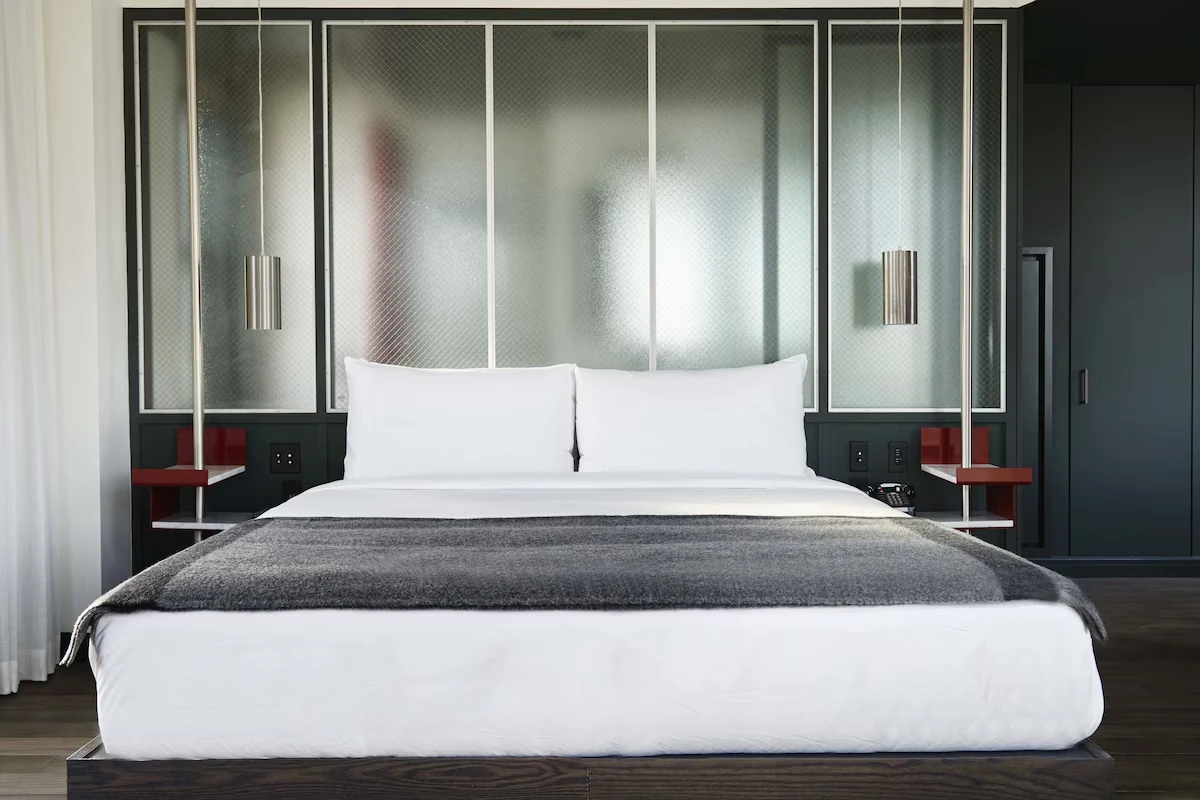
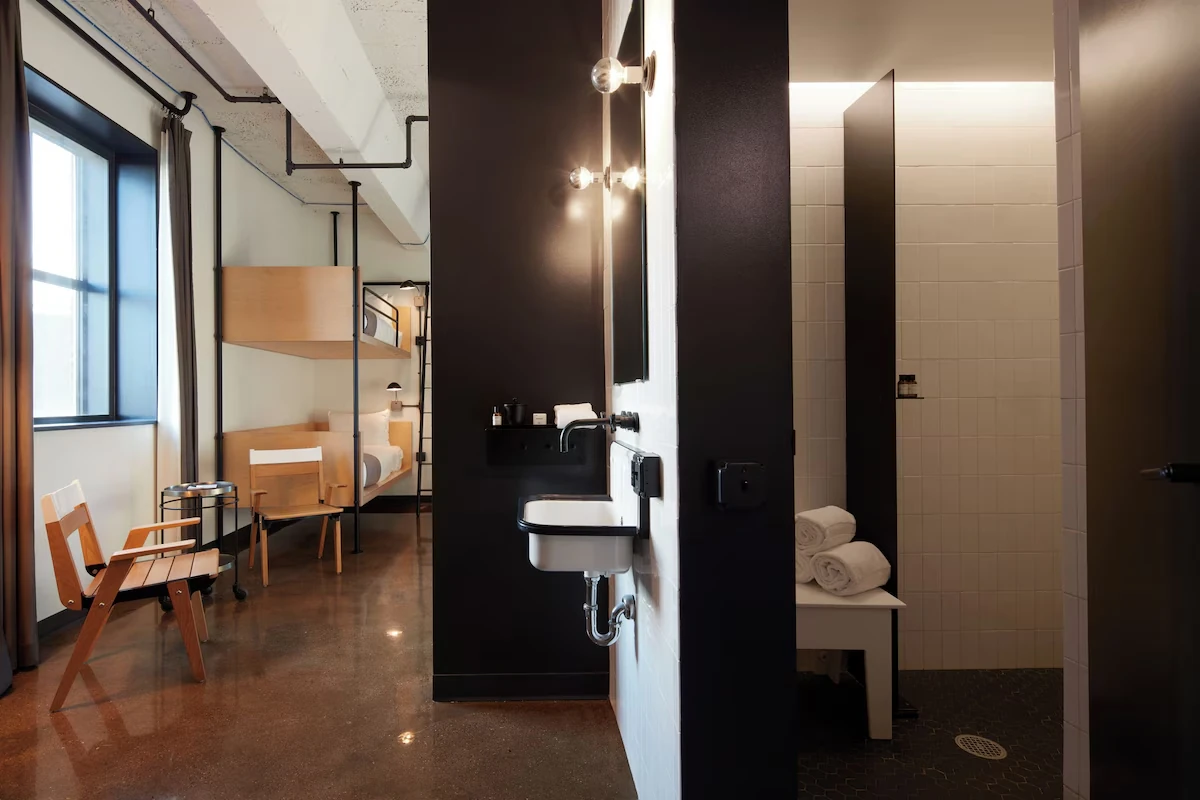
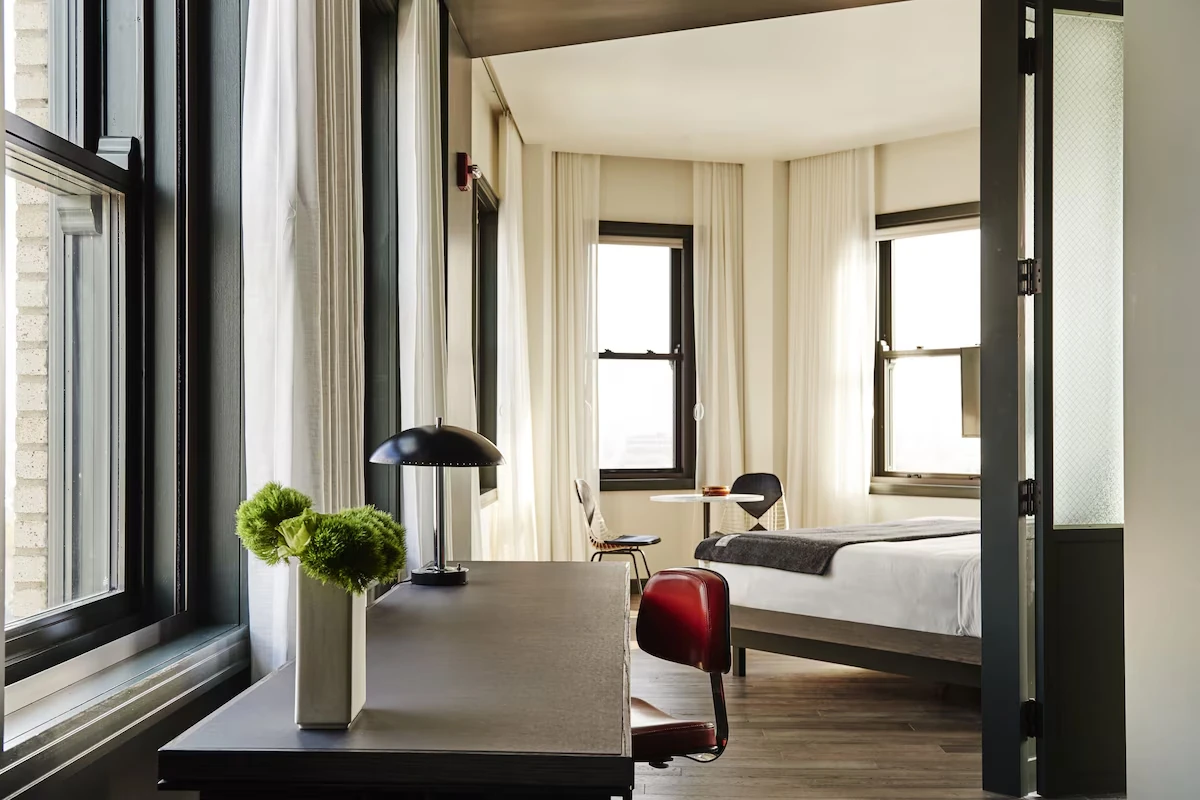
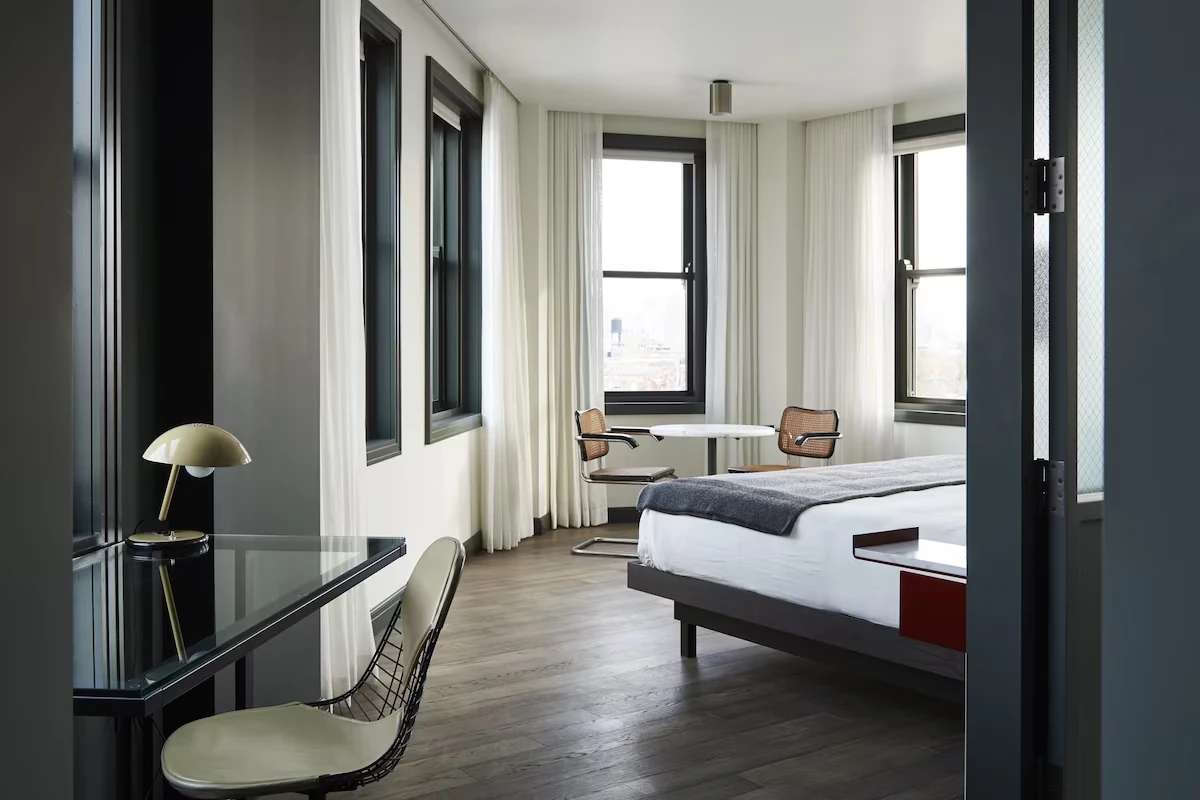
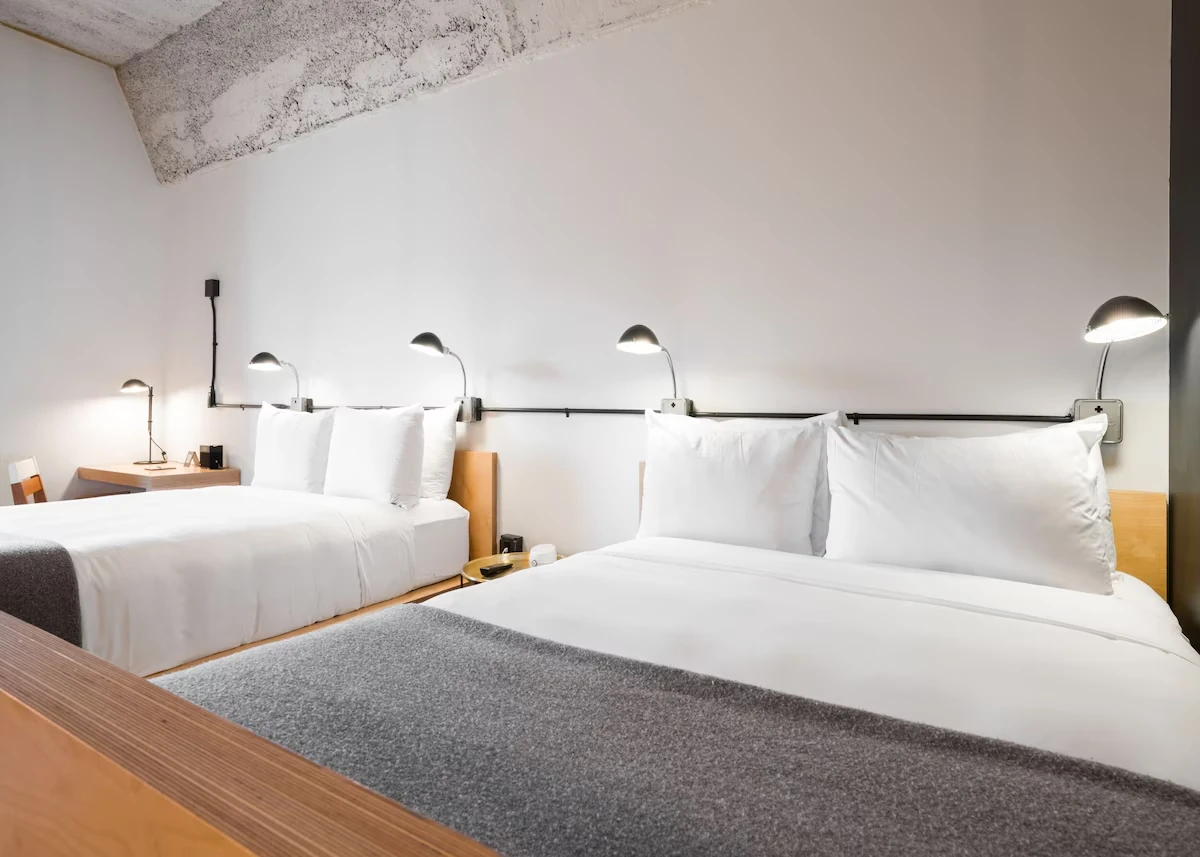
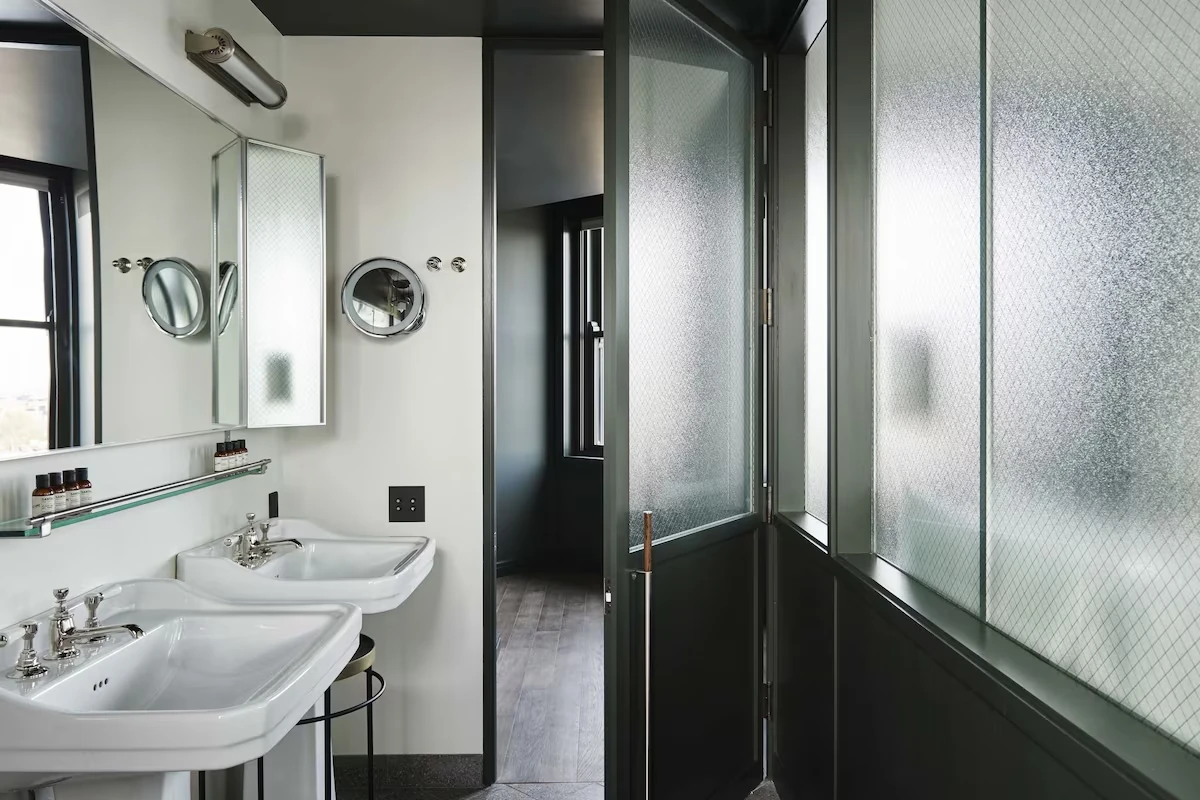
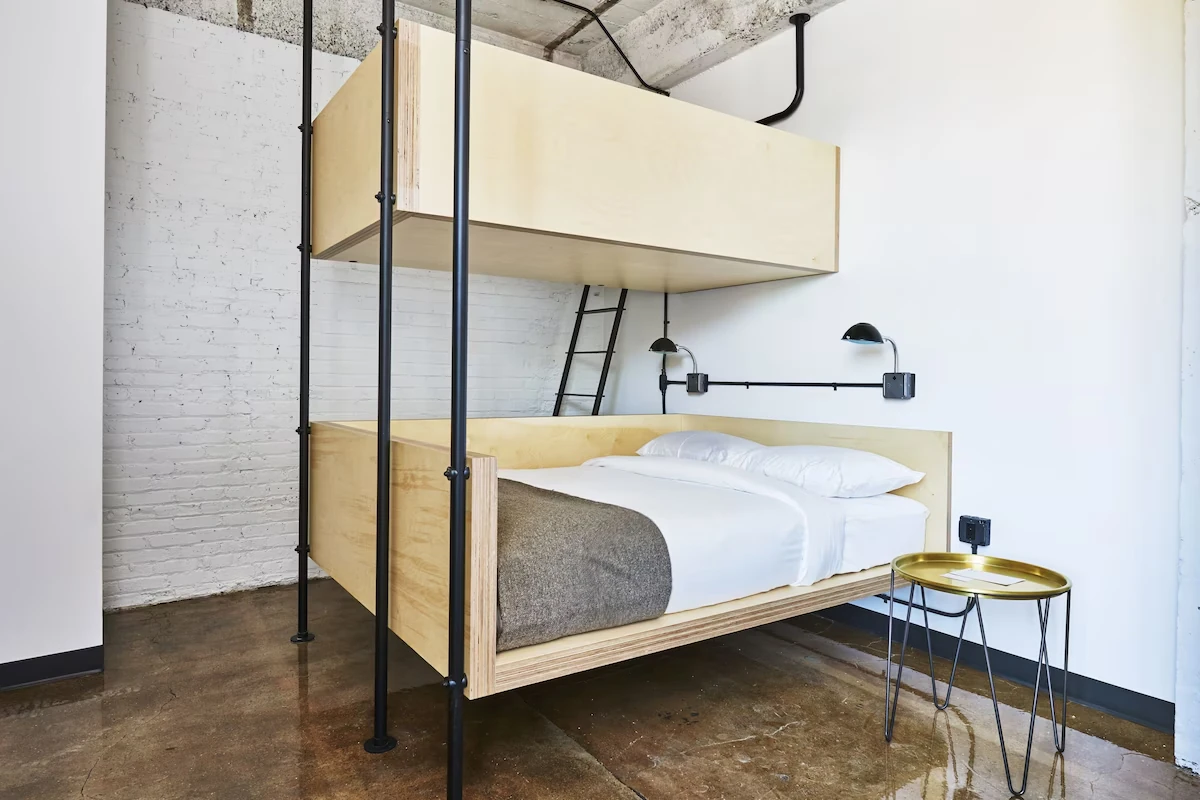
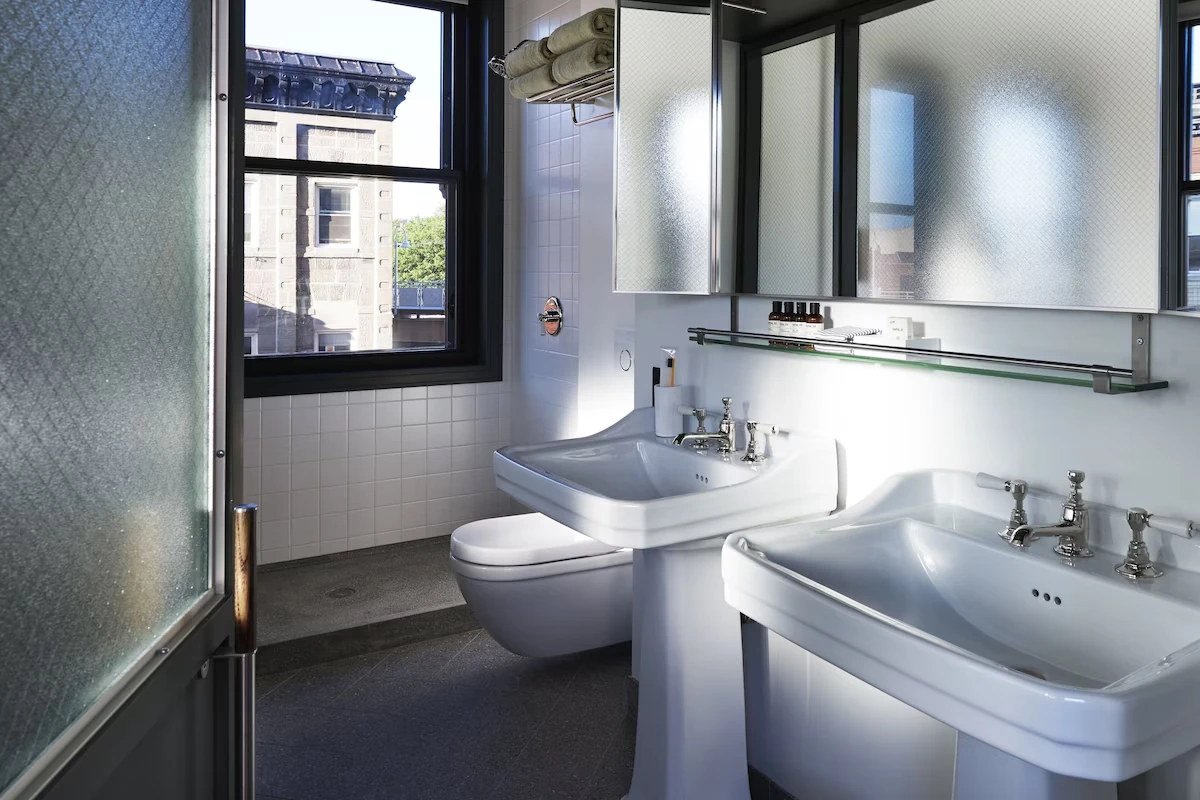
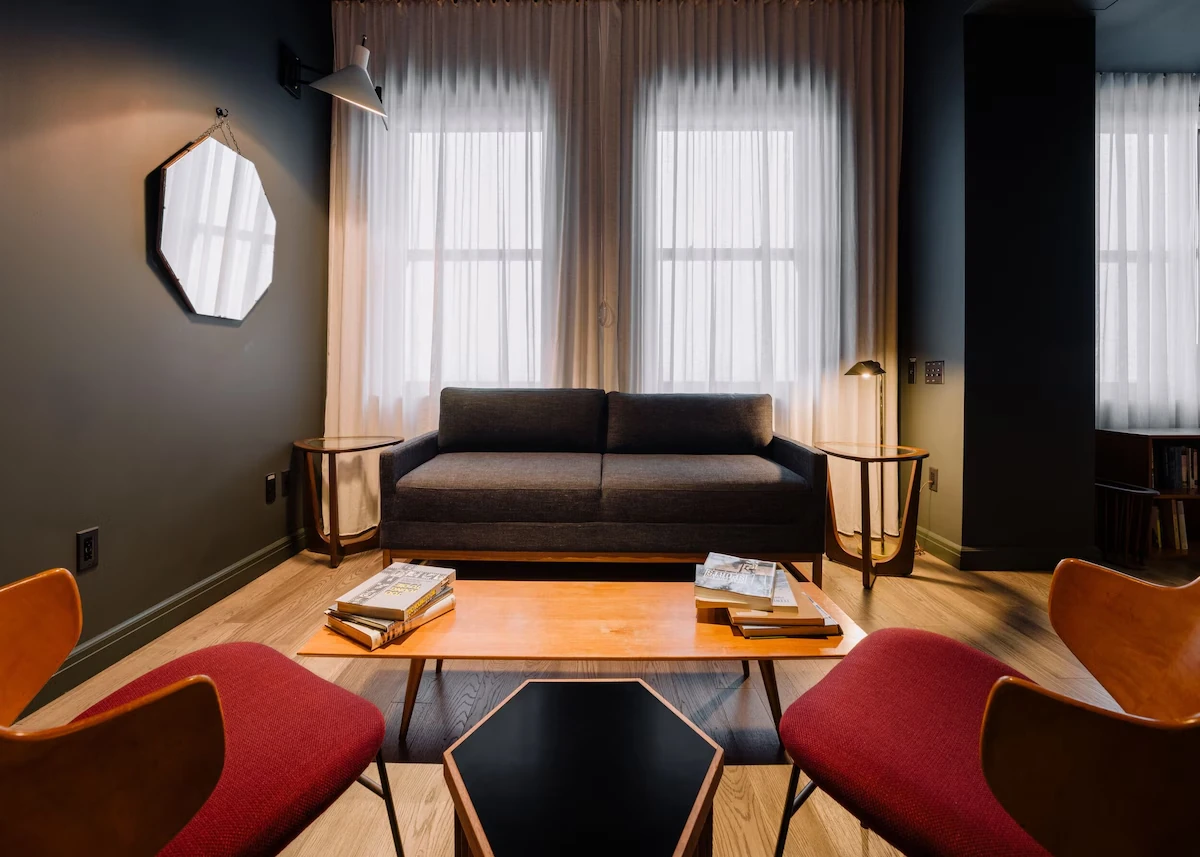
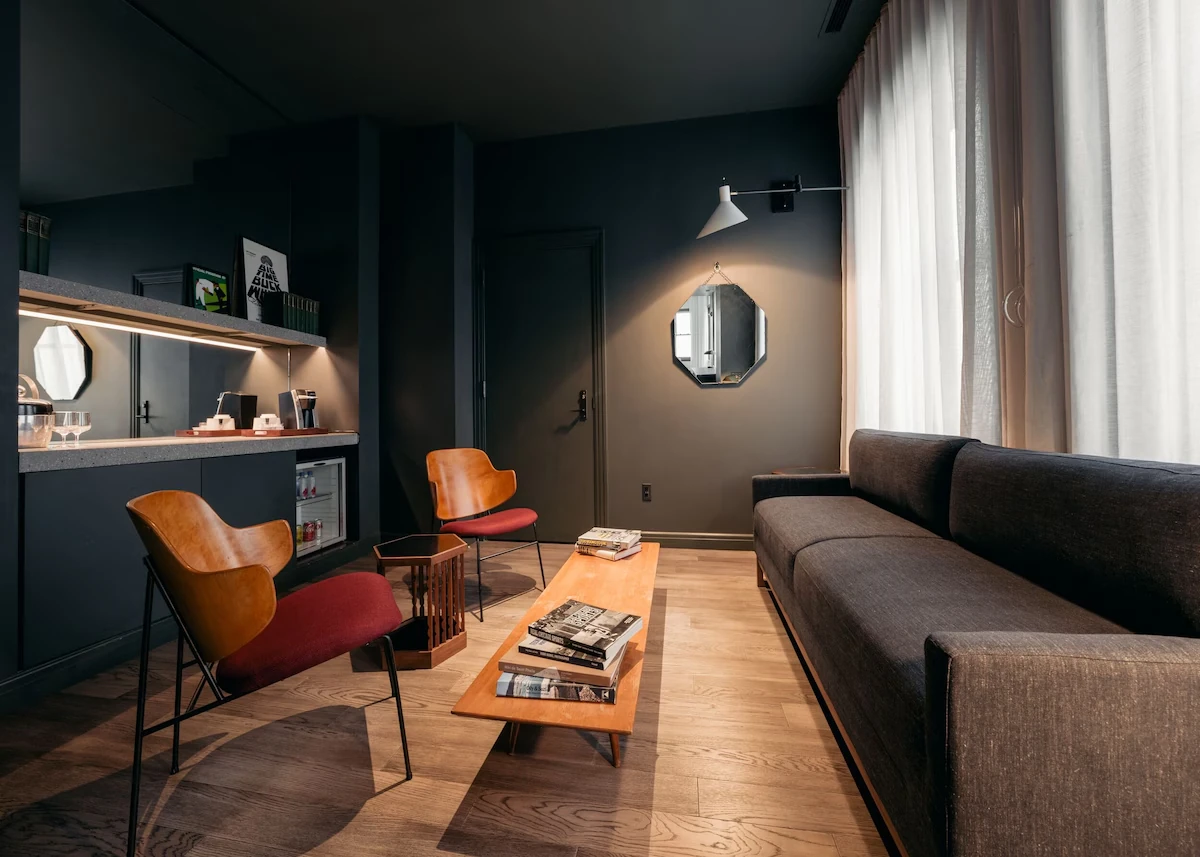
- Characterful rooms that layer the building’s history with cool, contemporary design.
What to keep in mind
- A slim 1920s tower — rooms are characterful but compact
- A lively six-corner intersection; a neighborhood, not downtown
Best for Design lovers and independent travelers who want a true neighborhood base in Chicago’s creative northwest side.
Summary of guest reviews. Sources: Date, architects, height and the quoted descriptions from the Milwaukee Avenue District designation report (Commission on Chicago Landmarks, designated April 9, 2008), pp. 15, 23, 29 and 52. The Robey Hotel, Commission on Chicago Landmarks, Preservation Chicago. Photography courtesy of The Robey, Chicago, a Member of Design Hotels, used with permission. Details may change over time.
Why this building matters
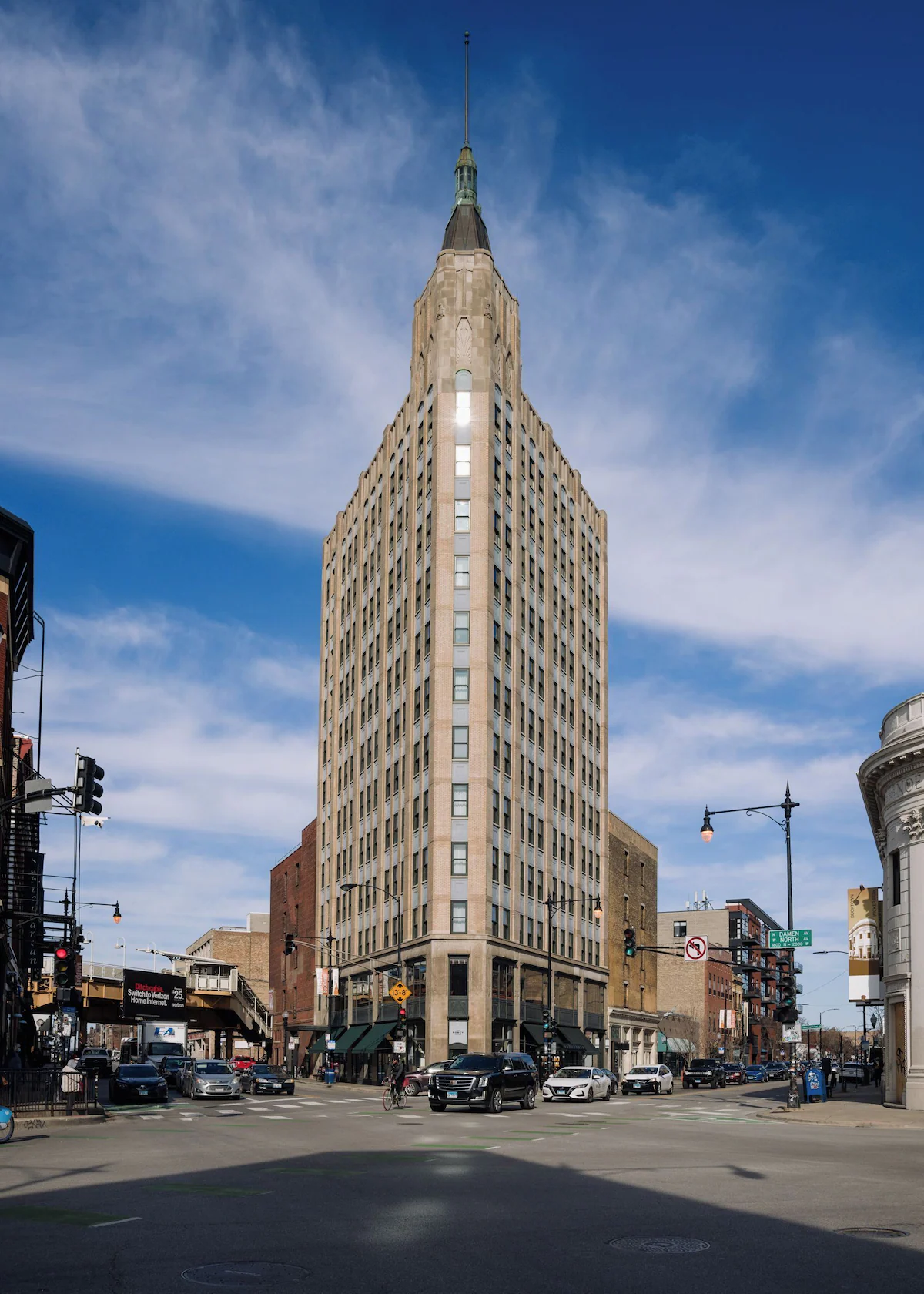
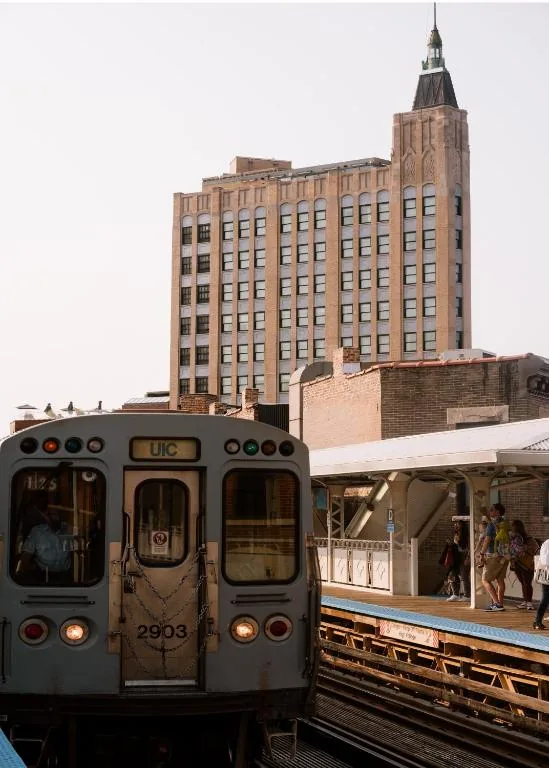
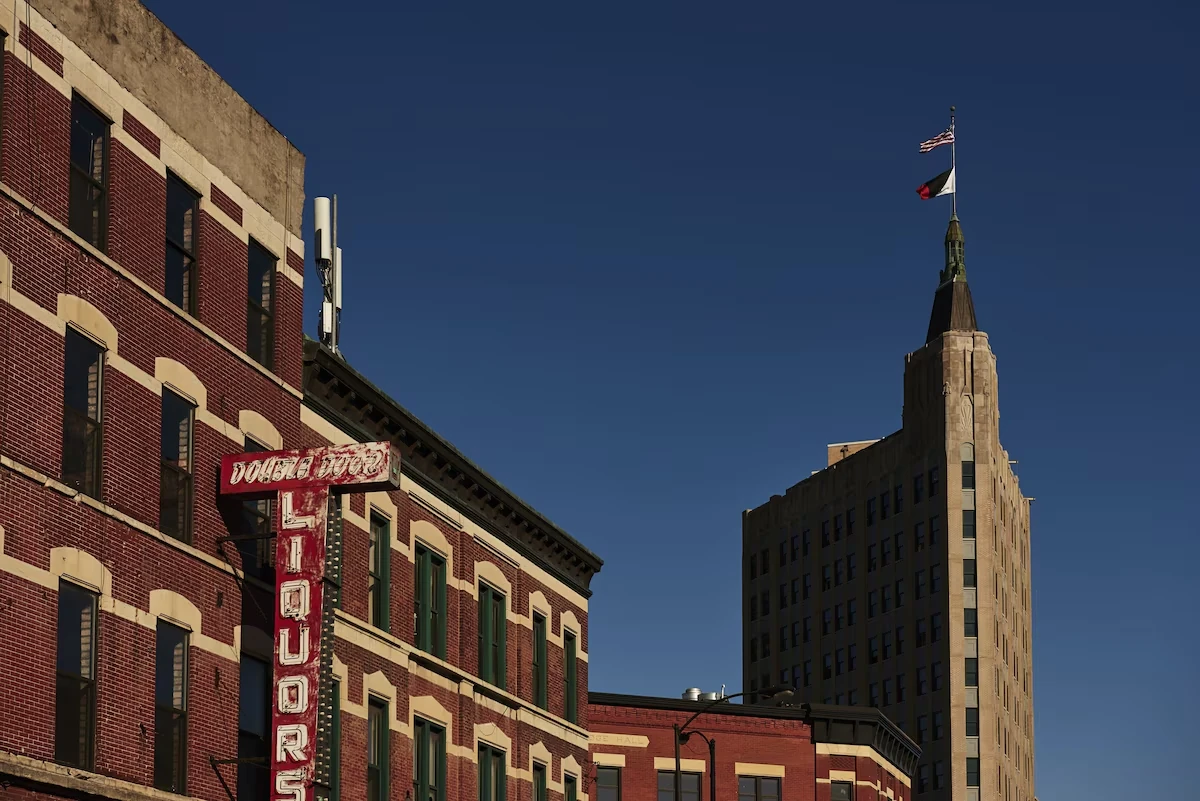
Designed by Perkins, Chatten & Hammond and completed in 1928, the 12-story Northwest Tower was one of the first skyscrapers built outside downtown Chicago, rising on the wedge-shaped corner where Milwaukee, North, and Damen avenues meet. A neighborhood icon — it lent its silhouette to the “Around the Coyote” arts festival — it sat largely vacant for decades before a careful restoration reopened it in 2016 as The Robey.
The Milwaukee Avenue District designation report calls it “the best expression of the office towers in the Milwaukee Avenue District — and certainly one of the best neighborhood office building[s] in Chicago.” Built in 1928 at the northeast corner of Milwaukee and North by Perkins, Chatten & Hammond, the limestone-clad tower went up to the maximum height the zoning code allowed — twelve stories — which produced a headline on its completion that read “the skyscraper leaves the Loop.”
It was speculative, and built to be let. Every office had windows and was served with water, electricity, gas, a central vacuum, and compressed air — that last for the dentists. The report records the pitch exactly: the tower was marketed to physicians, dentists and lawyers, who were promised the Damen Avenue elevated stop at the door and a neighborhood large enough to keep them busy. Bronze, marble and mosaic finished the lobby, and the small rooftop tower and bronze lantern still read, in the report’s words, as “a prominent visual landmark at the northern end of the district.” Financing came from the Noel State Bank, which had stood on this very site before moving to its own new building at 1601 N. Milwaukee Avenue in 1919. Neighborhood banks were often behind these six- to twelve-story office towers, put up near the big commercial intersections.
The report names it “the purest and most prominent example” of Art Deco in the district, and lists it as a contributing building. The Milwaukee Avenue District has been a Chicago Landmark since April 9, 2008.
The other flatiron
There are two wedge-shaped buildings at these six corners, and only one of them is called the Flatiron Building. It is not this one. The designation report puts the three-story Flatiron Building at the southeast corner of Milwaukee and North — 1565–89 N. Milwaukee, commissioned by Peter C. Brooks from Holabird & Roche in 1913, clad in terra cotta and pierced with large Chicago-school windows.
The Northwest Tower stands at the northeast corner, fifteen years younger and nine stories taller. Both are triangular, because the streets made them so. If someone tells you to meet them at the Flatiron in Wicker Park, they mean the low one across the intersection.
Why the report says 1606 N. Milwaukee
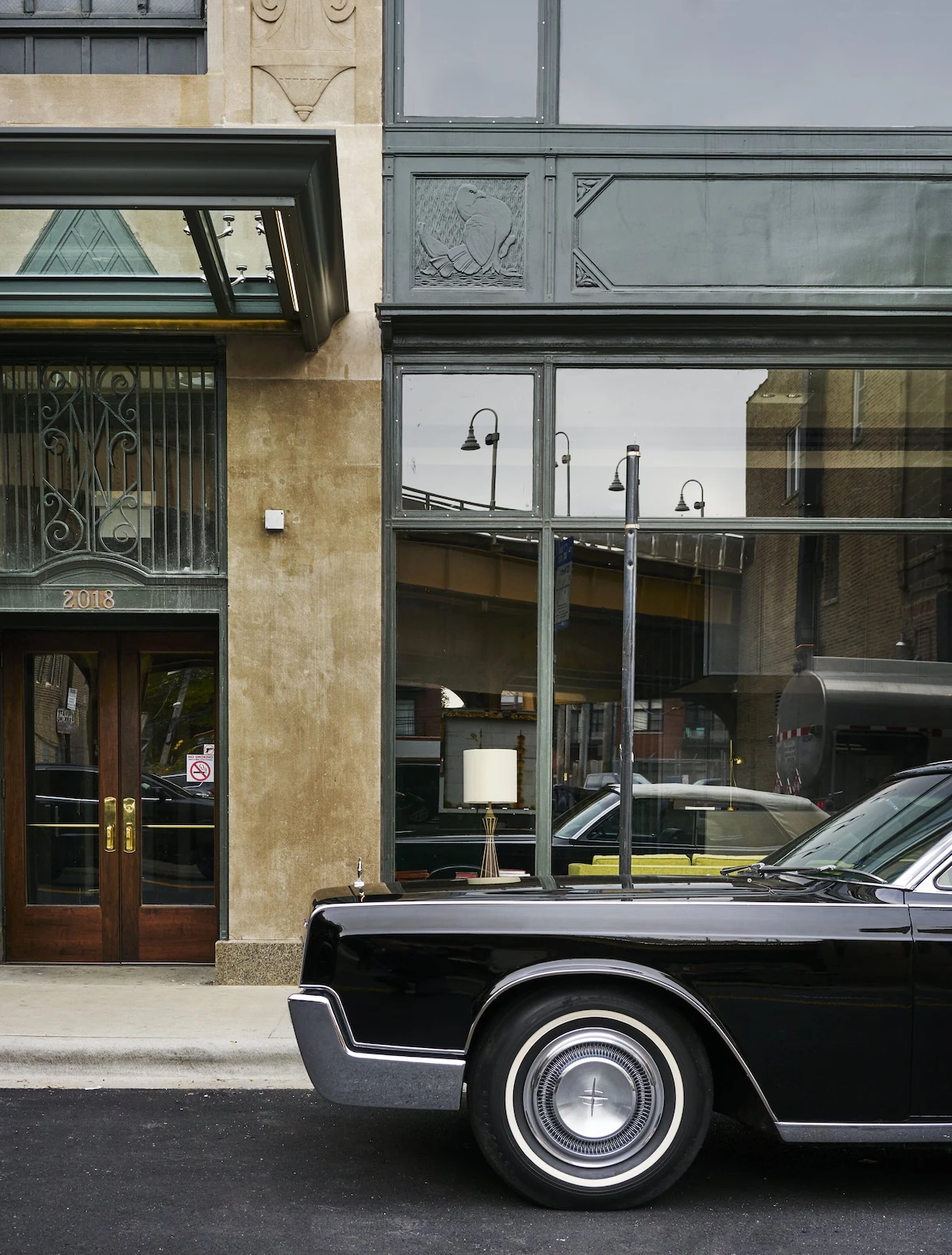
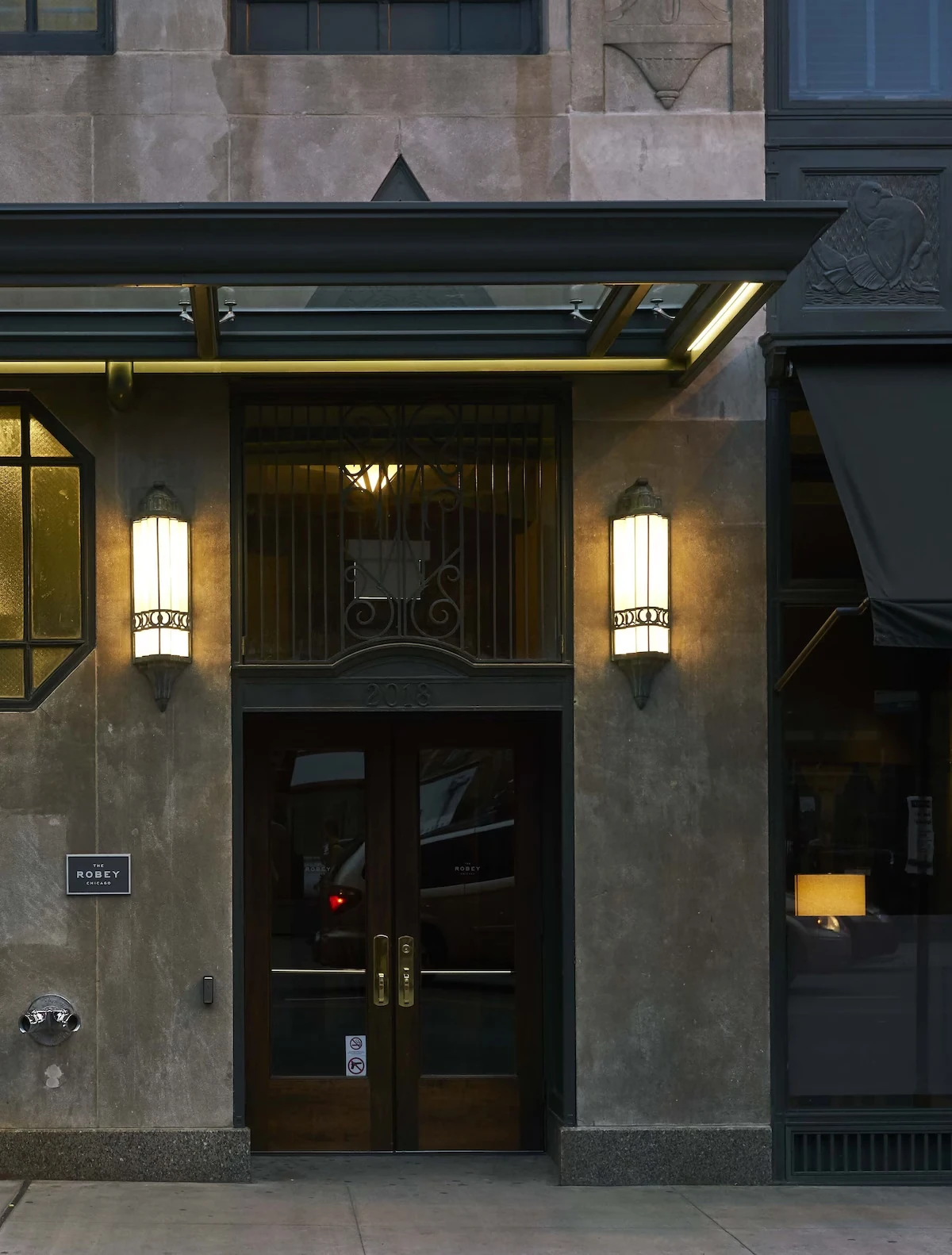
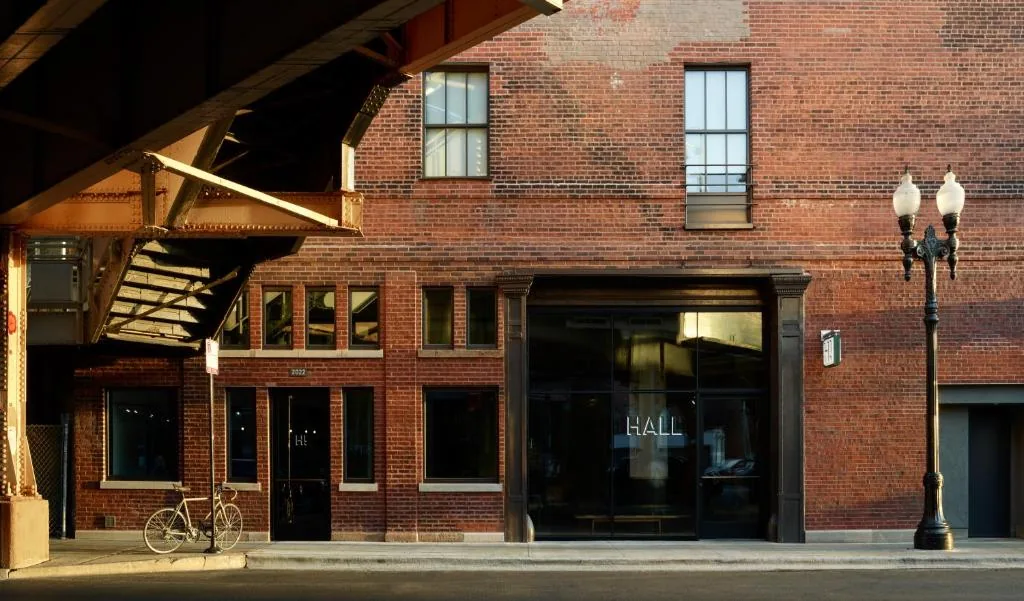
Anyone reading the Milwaukee Avenue District report alongside this page will find a different address. The report files the Northwest Tower at 1606 N. Milwaukee Avenue, and its inventory at 1606–08; the hotel’s address is 2018 W. North Avenue.
Both are right. The report puts the building “at the northeast corner of Milwaukee and North Avenues”, so it has frontage on each, and the two addresses describe the same walls from different streets.
Explore more like this
Art Deco hotels in Chicago · more landmark buildings reborn as hotels · more hotels with rooftop escapes